In 2026, the best Hospitality private label candles do more than add fragrance. They help a hotel lobby feel calm after a long flight, or make a guest room feel considered before unpacking begins. Yet a polished label cannot rescue a candle with weak scent throw, uneven burning, or packaging that feels out of place. The details matter.
Hospitality expert Danny Meyer offers a useful standard: “Hospitality is present when something happens for you. It is absent when something happens to you.” That idea applies to scent, too. A well-chosen candle should support the guest experience without demanding attention. It should suit the room, burn reliably, and feel consistent with the property’s character. Small test, big difference.
This guide examines what makes a private-label candle a strong fit for hotels, restaurants, spas, and boutique stays. We consider fragrance quality, vessel design, customization, production consistency, and practical ordering needs. We also distinguish attractive samples from products that perform well across real spaces. Scent remains personal; a blend that feels serene to one guest may seem too strong to another. That is an inconvenient truth, but ignoring it can lead to costly choices. The goal is not to name one perfect candle for every property. It is to help buyers find options that feel distinctive, dependable, and genuinely suited to their guests.
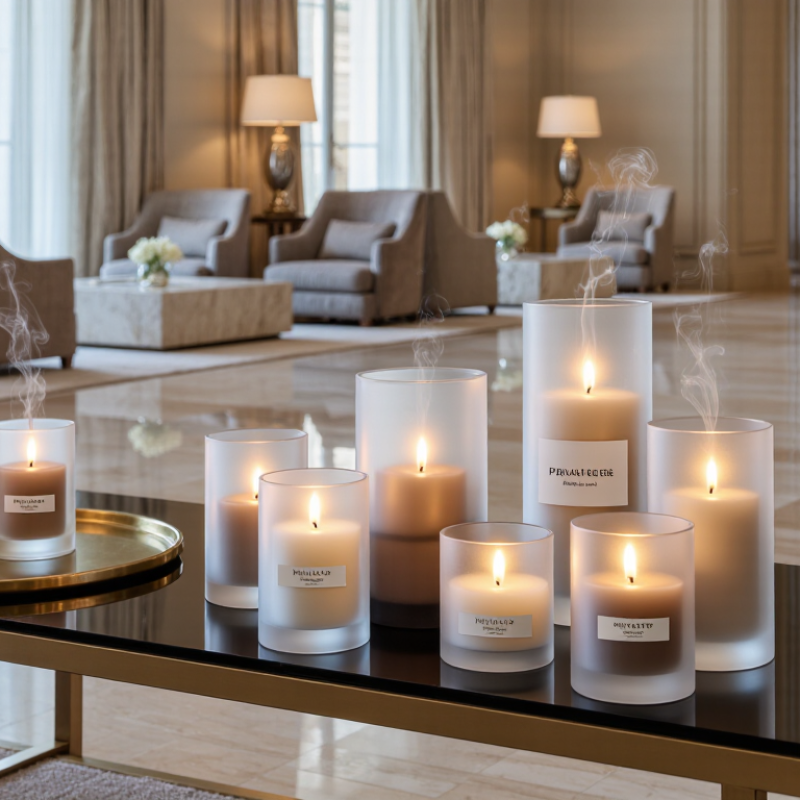
In hospitality, private-label candles are made for a hotel, restaurant, spa, or event venue and presented under its own identity. The venue usually selects the vessel, scent, and packaging with a candle maker. A small glass candle on a bedside table can echo the lobby’s wood and citrus notes. These candles may be sold in a gift shop, placed in guest rooms, or used to create a consistent atmosphere in a dining area.
Their use takes practical planning. Staff need clear guidance on where candles are permitted, how long they may burn, and how to extinguish them safely. Stable holders, trimmed wicks, and regular checks help reduce soot and uneven burning. Scent strength matters, too. A fragrance that feels subtle in a large lobby may overwhelm a small room or bother a sensitive guest. Testing candles in the actual space can reveal issues that a sample table cannot. It is not glamorous work.
For guest-room use, venues may choose smaller formats and simple scent profiles. In restaurants, unscented candles can avoid competing with food aromas. Teams should also track guest feedback, burn quality, and restocking needs; an attractive vessel is not useful if it tunnels or leaves wax behind. One detail is easy to miss: staff turnover can make care instructions inconsistent. A brief checklist helps, though it will not fix every lapse.
Private label candles are candles made by a supplier and customized for a hospitality business with its own fragrance choices, vessel, packaging, and branding. The specifications below are practical examples for planning; burn times are approximate and vary with wax, wick, room conditions, and candle care.
| Hospitality use | Typical format | Common wax option | Approx. burn time | Suitable fragrance direction | Private label choices | Practical considerations |
|---|---|---|---|---|---|---|
| Guest rooms | Small lidded jar, about 4–6 oz (113–170 g) | Soy or a soy-based blend | About 20–40 hours | Soft linen, light citrus, or gentle wood notes | Jar color, lid, label, scent name, and guest-facing packaging | Choose a restrained scent and provide clear candle-safety instructions. |
| Lobby and reception areas | Medium or large glass vessel, about 8–14 oz (227–397 g) | Soy-coconut or other tested container blend | About 40–80 hours | Balanced cedar, tea, green botanicals, or mild spice | Signature fragrance, vessel finish, label design, and coordinated gift packaging | Test scent strength in the actual room; keep flames away from traffic and combustible décor. |
| Spa and wellness spaces | Small to medium vessel, about 4–9 oz (113–255 g) | A stable container-wax blend selected through burn testing | About 20–55 hours | Subtle herbal, citrus, or clean botanical notes | Muted vessel colors, minimal labels, and a space-specific fragrance profile | Check fragrance sensitivities and local fire policies; fragrance-free options may be appropriate. |
| Restaurants and private dining rooms | Low-profile votive or small covered jar | Paraffin, soy, or blended wax formulated for the chosen format | Votives: about 8–15 hours; small jars: about 20–40 hours | Very light or unscented, so aromas do not compete with food | Custom color, vessel, label, and coordinated tabletop presentation | Use stable holders and follow venue rules for open flames; consider unscented candles near meals. |
| Hotel shop and guest gifts | Retail-ready jar, commonly about 6–10 oz (170–284 g) | Soy, coconut blend, or another container wax tested for performance | About 30–60 hours | A distinctive but broadly appealing scent inspired by the property or destination | Retail label, gift box, scent story, vessel choice, and multiple sizes | Confirm labeling, packaging, minimum order, replenishment lead time, and shipping requirements with the supplier. |
| Events and welcome amenities | Mini tin or small jar, about 2–4 oz (57–113 g) | Wax selected for consistent performance in small containers | About 10–25 hours | Light citrus, soft floral, or an event-specific scent | Event label, custom sleeve, color, and gift-ready packaging | Order samples early and check that the container, wick, and label are suitable for the intended use. |
When comparing options, request product samples and test fragrance strength, burn behavior, vessel temperature, packaging durability, and labeling before placing a larger order. Burn-time figures are estimates, not guarantees.
They are candles made for a hotel, restaurant, spa, or event venue. The venue chooses details such as the vessel, scent, and packaging.
They may appear in guest rooms, gift shops, lobbies, dining areas, or lounges. A small glass candle can echo a room’s wood and citrus tones.
Glass jars suit staffed reception areas, while small votives fit dining tables. Compact, lidded candles are easier to store between guest stays.
Use softer scents, such as light citrus or cedar, in small guest rooms. Unscented candles can help avoid competing with food aromas.
Ventilation, furnishings, and room size can change how fragrance feels. A sample strip may smell pleasant, but an hour in a small room can be different.
Keep flames away from linens, walkways, and drafts. Trim wicks, use stable holders, and check candles regularly.
Request burn-test records, vessel details, and samples from the intended production process. Check whether the wick stays centered and wax burns evenly.
Ask about wax materials, packaging, refill options, and supporting documentation. Shipping weight matters too, though a lighter vessel may feel less substantial.
A short checklist can guide staff on placement, burning time, and extinguishing. Staff turnover can still lead to missed steps.
Hospitality private label candles are custom-branded candles created for hotels, restaurants, spas, and other guest-focused spaces. They can help shape a welcoming atmosphere, reinforce a property’s identity, and serve as thoughtful amenities or retail products. Choosing the right candle involves more than appearance: buyers should assess burn consistency, materials, fragrance quality, container stability, clear usage guidance, and suitability for the intended setting.
The best options in 2026 will match each space’s needs, from subtle scents and compact formats for guest rooms to larger candles for lounges or dining areas. Compare suppliers on production quality, customization options, lead times, and transparent sustainability practices, including materials and packaging. By balancing safety, guest experience, design, and dependable supply, hospitality teams can select candles that feel cohesive with their property and provide lasting value.