Custom amber glass jar candles are candles designed around a brand, space, or personal use. Their warm brown glass filters harsh light and creates a calm, softly glowing appearance. The jar can carry a printed label, engraved detail, custom lid, or carefully selected fragrance. Size, wax type, wick material, and burn time can also be adjusted.
Small details matter. A heavier jar feels more stable on a bedside table. A cotton wick may create a familiar flame, while a wooden wick can add a gentle crackling sound. Fragrance strength should suit the room, not overwhelm it. A candle maker should test wax adhesion, scent performance, wick trimming, and container temperature before production. These steps show practical experience, not just attractive packaging.
Custom amber glass jar candles also require honest evaluation. Amber glass looks premium, but it does not automatically improve burn quality. A beautiful label cannot correct tunneling, excess soot, or an improperly sized wick. Results may change with fragrance concentration, room temperature, and burning habits. That is why reliable suppliers provide clear usage guidance and realistic product specifications. Keep the wick trimmed.
A thoughtful custom candle balances appearance, function, and safe handling. It should burn steadily, display accurate information, and suit its intended setting. The process is rarely perfect on the first attempt. Testing may reveal an uneven melt pool or a fragrance that needs adjustment. Those imperfections are useful. They guide better decisions before the final candle reaches customers.
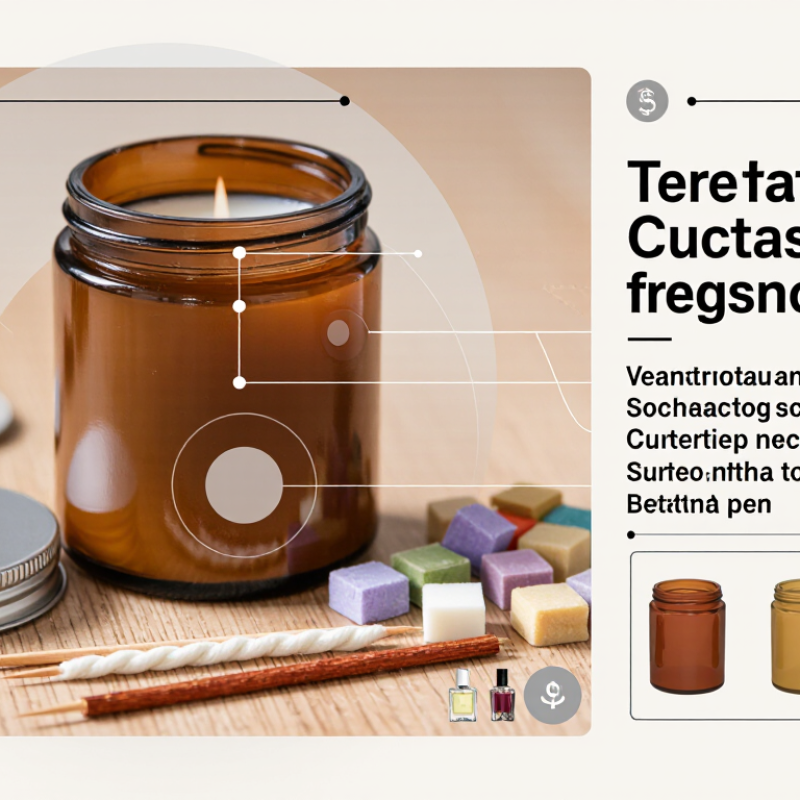
A custom amber glass jar candle is more than a brown container with a private label. It is engineered around selected glass, wax, wick, fragrance, closure, and artwork. Amber glass filters part of ultraviolet light. This may help protect fragrance oils and create a warm, premium appearance. The word custom can sound broader than it really is. A printed label alone is not full customization. True customization begins with controlled specifications and repeatable production.
The vessel must match the candle formula. Glass thickness, inner diameter, fill weight, and thermal performance affect burning behavior. A professional maker should complete stability, burn, soot, adhesion, and wick tests. ASTM F2417 provides safety guidance for candle manufacturing in the United States. The National Candle Association identifies container candles as a popular candle format. Grand View Research valued the global candle market at USD 12.88 billion in 2022. Its report projects a 5.7% CAGR from 2023 to 2030. These figures support customization, but they do not guarantee quality. A beautiful jar may still tunnel, overheat, or lose scent. That deserves more honesty.
Tips: Specify the amber shade, jar dimensions, glass weight, wax type, wick series, fragrance load, and lid material. Request a documented burn-test report, not only a product photograph. Test samples for flame height, vessel temperature, wax pool, and scent throw. A narrow jar can burn unevenly. That failure is useful. Custom work needs evidence, not assumptions.
A custom amber glass jar candle combines tailored packaging with practical light protection. Its brown-gold color is not only decorative. Amber glass filters much of the ultraviolet light that can reach the candle’s wax, fragrance oils, and colorants.
UV exposure may accelerate fragrance oxidation. It can also cause subtle changes in wax appearance and scent balance. A candle left near a sunny window may smell flatter over time. The effect is not always dramatic. That makes it easy to overlook.
Amber glass helps reduce this risk.
In product testing, light exposure is best considered alongside heat and air. Amber glass cannot stop every wavelength, and it is not a perfect shield. A tight lid, moderate room temperature, and shaded storage still matter. I have found that these small details often influence scent quality more than expected.
Custom sizing also affects protection. A deeper jar can reduce direct light reaching the wax surface. A well-fitted lid limits dust and unnecessary air contact between uses. However, excessive heat can still soften wax and speed fragrance loss, even inside amber glass.
The most reliable approach is simple: use amber glass, close the candle after burning, and keep it away from strong sunlight. A darker container supports stability, but it does not replace careful storage or proper formulation.
What Is a Custom Amber Glass Jar Candle?
A custom amber glass jar candle begins with a container designed around the candle experience. Mold development sets the jar’s diameter, height, wall thickness, and grip. A reliable manufacturer should review drawings, samples, and tolerance limits before production. Small changes can affect wax cooling and burning behavior.
Color is not only decorative. Amber glass can create a warm, filtered appearance and help reduce light exposure. However, shade consistency may shift between production batches. Finish choices include smooth, frosted, matte, or textured surfaces. Each finish changes how fingerprints, labels, and shelf lighting appear. Label design should match the jar’s curve and surface energy. Adhesive testing matters, especially in humid rooms. The closure can be a metal lid, wooden top, or fitted cover. It should close securely without scraping the glass.
Tips: Request a physical sample before approving the mold. Test the candle after curing, during burning, and after cooling. Check heat distribution around the jar. Also inspect the label after several days. This step is often skipped.
Practical development rarely feels perfectly linear. A beautiful prototype may cool unevenly or leave too little hand space. I have found that minor rim changes can improve pouring and lid alignment. Still, every adjustment needs another test. Ask for documented material specifications, batch records, and safety guidance. Reliable communication prevents attractive details from hiding functional problems.
| Design Stage | Key Design Dimension | Typical Options or Specifications | Recommended Customization Considerations | Expected Output |
|---|---|---|---|---|
| 1. Mold | Jar shape and capacity |
Straight-sided, rounded, faceted, or tapered jar Common capacities: 120 ml, 180 ml, 250 ml, and 300 ml |
Select a shape that provides enough internal space for the intended wax volume, wick position, label area, and closure. A stable base helps reduce tipping risk during use. | 3D concept, technical drawing, prototype, and production mold |
| 2. Glass Color | Amber tone and light protection |
Light amber, medium amber, or deep amber Typical glass color is produced by adding metal oxides during glass manufacturing |
Darker amber glass generally provides stronger protection from visible light. Color should be checked under natural and artificial lighting to maintain consistency between production batches. | Approved color sample or reference standard for production |
| 3. Finish | Surface appearance and tactile effect |
Glossy, matte, frosted, sandblasted, or partially coated finish Optional screen printing, spray coating, or decorative texture |
The finish should be compatible with the candle’s heat exposure, handling requirements, cleaning process, and the selected label adhesive. Matte and frosted surfaces can create a softer premium appearance but may require careful label testing. | Surface sample, color approval, and finish performance check |
| 4. Label | Information layout and material |
Paper, textured paper, clear film, or direct-to-glass printing Typical information: candle name, wax type, net weight, burn instructions, safety warnings, and batch details |
Keep critical safety information readable at 12 pt or larger where practical, maintain sufficient contrast, and leave a flat area for reliable application. Labels should resist wax residue, fragrance oils, and normal handling. | Artwork proof, physical label sample, and placement guide |
| 5. Closure | Lid material, fit, and function |
Metal lid, glass lid, wood lid, or fitted cover Common features include friction fit, threaded closure, silicone seal, or decorative insert |
The closure should fit securely without damaging the jar rim. Consider odor retention, dust protection, opening force, material compatibility, and whether the lid is intended for storage rather than burning. | Closure sample, fit test, and compatibility approval |
| 6. Wax and Wick Compatibility | Internal candle performance |
Soy, paraffin, beeswax, coconut, or blended wax Cotton or wooden wick selected according to jar diameter and wax formulation |
Wick size should be validated through controlled burn testing. Jar diameter, fragrance load, wax type, fill height, and airflow can all affect melt-pool formation, burn time, and container temperature. | Burn-test report covering flame behavior, melt pool, soot, and vessel temperature |
| 7. Quality and Safety Review | Dimensional, visual, and use testing | Checks may include glass defects, wall thickness, rim condition, color consistency, label alignment, lid fit, leakage, and burn performance | Review the finished candle as a complete system rather than testing the jar, wax, wick, label, and closure separately. Safety instructions should be clear and appropriate for the final product configuration. | Approved production specification and final inspection checklist |
A custom amber glass jar candle combines a tinted vessel with a selected wax, wick, fragrance, and fill weight. The amber color helps reduce light exposure and creates a warm appearance. It does not automatically make the candle safer. In practice, the complete candle requires evaluation. Glass thickness, jar diameter, wick position, and wax behavior can change performance.
ASTM F2417 focuses on fire safety for candles. Testing should examine flame height, stability, excessive smoking, container heating, and secondary ignition during burning. A wick that performs well in one jar may burn unpredictably in another. This is an easy detail to underestimate. The finished product should be tested under controlled conditions, not only the empty glass container. Manufacturing checks should also confirm centered wicks, consistent wax levels, and clean vessel surfaces.
ASTM F2058 addresses candle fire safety labeling. A suitable label should provide clear warnings and practical burning instructions. It should remain readable and attached during normal handling. Guidance commonly includes trimming the wick, keeping the candle away from drafts, and avoiding unattended burning. Warning language must match the tested product and intended market. Standards do not replace professional judgment. A visually attractive amber jar can still become dangerously hot, crack, or develop an unstable flame. I would review every custom change, even a small diameter adjustment, because design improvements can create new safety questions.
A custom amber glass jar candle needs measurable performance, not only an attractive color. The National Candle Association reports that candles are used in roughly seven out of ten U.S. households. That reach makes consistent testing important. Burn time depends on wax density, fragrance load, wick size, and the vessel’s inner diameter. A 220-gram candle may burn for 40 to 50 hours, but this range is not a guarantee. Each batch should undergo repeated burn tests, with flame height and melt-pool depth recorded every few hours.
Soot control requires more than choosing a cotton wick. ASTM F2326 provides a method for evaluating visible candle emissions under controlled conditions. Keep the wick trimmed near 6 millimeters before each test. A tall, flickering flame often signals excessive wick length, airflow, or fragrance imbalance. The result may look acceptable in a showroom but fail in a quiet room. I would test at least three samples, because one clean burn proves very little.
Glass strength also deserves documented limits. ISO 7459 addresses thermal-shock resistance, while ISO 7458 covers internal-pressure testing for glass containers. ISO 12818 provides standard tolerance guidance for container dimensions. For a custom jar, record wall thickness, rim diameter, base flatness, and fill height. A two-millimeter variation can affect wick centering and heat distribution. Amber glass can hide small defects. That is useful, but slightly dangerous. Examine every production lot under strong, angled light.
Amber glass filters much ultraviolet light before it reaches the wax and fragrance oils. Light still gets through. Reduced exposure can slow fragrance oxidation and color changes.
Yes, prolonged sunlight may make the fragrance smell flatter over time. The change can be subtle and easy to miss. A sunny windowsill is not ideal storage.
No, tinted glass only helps manage light exposure. Heat, wick behavior, jar size, and wax performance still affect safety. The container is not a safety guarantee.
Keep the candle closed and away from strong sunlight. Use a moderate room temperature. A fitted lid also limits dust and unnecessary air contact.
A deeper jar may reduce direct light reaching the wax surface. Diameter changes can also affect flame height and container temperature. Small design changes deserve fresh testing.
Testing should examine flame height, stability, smoke, container heating, and secondary ignition. The finished candle needs evaluation. An empty jar proves very little.
The label should include clear warnings and practical burning instructions. It should mention wick trimming, draft avoidance, and supervised burning. Instructions must match the tested candle.
A centered wick supports more predictable burning and helps reduce uneven heating. An off-center wick may heat one side of the jar excessively. This detail is easy to underestimate.
No, a lid helps limit dust and air exposure between uses. It cannot prevent heat damage or reverse fragrance oxidation. I would not rely on it alone.
Custom amber glass jar candles combine functional protection with tailored visual design. Their amber-colored glass helps reduce ultraviolet exposure, which can otherwise affect wax appearance and fragrance stability. The custom process may include developing a unique mold, selecting the glass color, choosing a glossy, matte, or textured finish, and coordinating labels, lids, or other closures. These choices allow the candle container to reflect a specific product concept while maintaining practical performance.
Safety and quality must remain central throughout production. Candle designs should be evaluated against applicable requirements, including ASTM F2417 for candle fire safety and ASTM F2058 for fire safety labeling. Important quality metrics include consistent burn time, controlled soot production, adequate glass strength, stable heat performance, and precise dimensional tolerances. By balancing appearance, protection, safety, and manufacturing consistency, Custom amber glass jar candles can provide a reliable and refined candle experience for both users and producers.