Custom Candles Made Simple · Made in the USA · Dispatch within 48 hours of artwork approval
0%

Event branding custom candles can turn a gathering into an experience guests remember after the lights come up. A soft cedar scent near the entrance, amber glass on each dinner table, and a small label bearing the event date can make a room feel considered. The candle is not just a keepsake. It connects color, scent, packaging, and message in one tangible object. Marketing author Seth Godin describes a brand as “the set of expectations, memories, stories, and relationships” associated with a choice. That idea fits event candles well: the details shape what guests recall. Small details matter.

This guide explores seven practical ways to use custom candles in event branding, from matching fragrance to the occasion to choosing containers that suit the venue. It also considers placement, label readability, packaging, and how to make favors useful rather than disposable. A candle can feel elegant in a hotel ballroom, but the same design may look out of place at a relaxed garden reception. Test samples in the actual space. Check how the label reads under warm lighting, and consider whether the fragrance feels pleasant after an hour—not just during a quick test. There is no perfect formula. Scent preferences vary, and branding can become too literal. A logo on every surface may be memorable for the wrong reason. Thoughtful restraint usually works better. The goal is a cohesive guest experience, not simply a branded object.
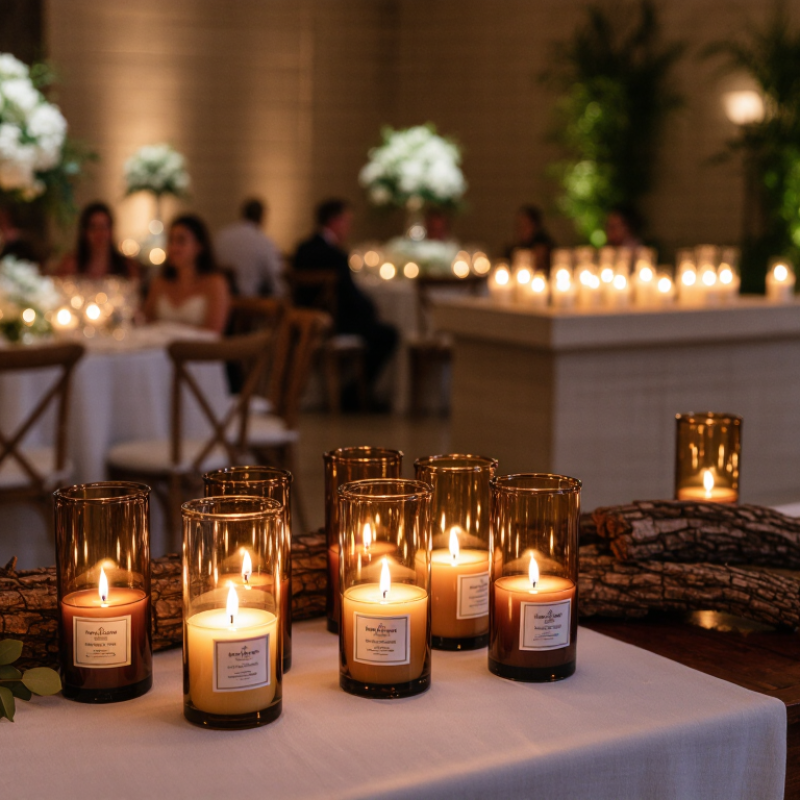
7 Tips for Event Branding with Custom Candles

Defining the Event’s Brand Identity and Goals

Before choosing a candle color or scent, define what the event should communicate. Is it a warm welcome, a product launch, or a quiet evening of appreciation? Be precise. A clear goal helps every detail feel connected, from the invitation wording to the label on each candle.

Picture the room: cream linens, low amber lighting, and a small candle beside each place card. Would that scene suit the event’s personality? Choose colors, type, and packaging that support its tone, rather than simply matching the decor. If guests should remember a milestone, the label might include its date or a short phrase tied to the occasion. Keep the message readable at arm’s length. Small details matter.

Test a sample in the actual venue when possible. A scent that seems gentle in a workshop may feel overpowering in a crowded room, so consider an unscented option. Ask a few people from the intended audience what the candle suggests before ordering in quantity. Their feedback may challenge your assumptions. A first concept can look polished on a screen and still feel generic in person. That is useful to notice early. Define one practical outcome, such as guests recognizing the event’s theme or taking home a keepsake, and use it to guide design choices.

Choosing Candle Styles, Scents, and Materials

7 Tips for Event Branding with Custom Candles

Choosing Candle Styles, Scents, and Materials

Tip 1: Match the vessel to the event’s setting. A low, wide tin suits casual outdoor tables, while a glass jar feels polished on a reception desk. Tip 2: Keep the label readable from arm’s length. A pale jar can look lovely in photos but disappear against a white tablecloth. Test it in the actual lighting.

Tips 3–5: Choose one gentle scent, then check how it smells after an hour in the room. Strong fragrance can compete with food, flowers, or conversation. The National Candle Association reports that about seven in ten U.S. households use candles; that figure suggests broad familiarity, not universal preference. Keep it restrained. Offer an unscented option when guests may be sensitive to fragrance. For materials, compare wax type, vessel weight, and burn performance with your supplier. “Natural” on a label alone does not tell guests how a candle performs.

Tips 6–7: Use the event palette in the vessel or label, not every detail at once. Ask for a sample batch before placing a large order. Check that the scent, label color, and wax look consistent under warm venue lighting. Small mismatches happen. Note them early.

7 Tips for Event Branding with Custom Candles - Choosing Candle Styles, Scents, and Materials

Tip Candle Style Scent Direction Material or Finish Event Fit and Practical Note
1. Match the candle shape to the event format Small jar or travel tin A light, broadly appealing scent such as soft citrus or gentle lavender Lidded container with a simple paper label Suitable for welcome bags and take-home gifts; compact containers are easier to pack and distribute.
2. Choose a scent that suits the setting Low-profile jar candle Subtle, clean notes; avoid overpowering fragrance in small or enclosed rooms Clear or lightly tinted glass For indoor events, check venue rules before using lit candles. Unscented options can work well around food or scent-sensitive guests.
3. Use color and finish to reinforce the event palette Votive, pillar, or container candle A scent that complements the mood without competing with the visual design Coordinated wax color, vessel, and label tones Request a sample when color matching matters; the appearance of wax and labels can vary under different lighting.
4. Select materials with use and cleanup in mind Container candle for favors; pillar candle for display Choose based on the event atmosphere and intended use Glass, metal, or a suitable reusable vessel; use a stable holder for pillars Consider transport, surface protection, and disposal. Follow the candle maker’s care and burn instructions.
5. Make personalization clear and legible Jar or tin with a flat label area A named scent can connect the gift to the occasion Printed label or tag with readable type and a concise message Keep essential candle safety information visible and avoid covering required product details with decorative elements.
6. Plan for scent sensitivities and shared spaces Unscented candle or individually packaged scented favor Unscented, or a mild fragrance offered as an optional take-home item Sealed packaging with a clear scent description Consider guest preferences, food service, and ventilation; do not assume one fragrance will suit everyone.
7. Test samples before ordering for the full event The intended final style and size Test the fragrance in the kind of space where it will be used Check vessel finish, label adhesion, and packaging together Review appearance, scent strength, delivery timing, and applicable venue policies before confirming quantities.

Applying Brand Elements to Candle Design

Applying brand elements to custom candles starts with a clear visual hierarchy. Choose one main color, then use a secondary shade for smaller details such as a thin label border. Match the type style to the event materials, but keep the candle label readable at arm’s length. A guest should recognize the event’s look without needing to inspect every detail. Small details matter.

Tips: Carry one recognizable element across the candle, packaging, and display card. A repeated leaf motif or a narrow color stripe can create cohesion without crowding the design. Keep essential text, such as the event date, away from curved edges. Test a printed sample first; colors can look warmer on wax than they do on a screen.

Material choices affect the result, too. A matte label may suit a quiet dinner, while a simple ribbon can add texture to a celebration table. Avoid combining several fonts, metallic finishes, and decorative patterns at once. I have found that an early mock-up catches awkward spacing, though it cannot predict every lighting condition. Place a sample under the venue’s actual lights and check whether the label still feels balanced. If a small element disappears, remove it or make it more legible. Some designs need another pass.

Placing Custom Candles Across Event Touchpoints

Custom candles can connect an event’s visual identity across several small moments. Place one unlit candle at the welcome table, beside printed schedules or place cards, where guests can notice its label without blocking the queue. Keep the design consistent with the event palette, but make the wording readable at arm’s length. Keep it simple. At dinner, use candles as part of the table setting, not as an excuse to crowd out menus or conversation. Check the venue’s rules before lighting anything, and keep flames away from fabric, greenery, and passing guests.

The experience can continue in a take-home gift area. Arrange wrapped candles near the exit with a small card explaining the scent and care instructions. A clear display helps guests choose without slowing departure. Fragrance needs thought, too: a strong scent may distract during a meal or bother sensitive guests, so consider an unscented option. One detail is easy to miss: labels can look elegant on a screen but become hard to read under warm, dim lighting. Test a sample at the venue, then adjust the size or contrast if needed. The first layout may still feel crowded; move a few pieces rather than adding more.

Planning Production, Distribution, and Guest Takeaways

Custom candles are easier to manage when production starts with the event plan. Confirm the guest count, venue rules, and delivery date before choosing a vessel, fragrance, or label. Order a sample and check its color under the venue’s lighting. Burn-test it in a similar room; a scent that feels subtle at home may become overpowering in a small reception space. Test early. Leave time to adjust the fragrance or artwork, and set a firm proof-approval date. A late label change can delay packing more than expected.

Plan distribution alongside production. Add a modest quantity buffer for damaged pieces and last-minute guests, then check each candle as cartons arrive. Count, inspect, and separate any items with cracked glass, loose lids, or smudged labels. For takeaways, use protective packaging that fits the vessel without bulky filler. Place candles near the exit or at each guest’s seat, depending on how the room flows. Include clear burn and care instructions, especially if the candle will travel in a warm car. I once thought a decorative tag would be enough; it looked lovely, but guests still asked how to use the candle safely. Keep the message useful and legible.

7 Tips for Event Branding with Custom Candles

Example planning lead times for production and delivery (weeks)

These are illustrative planning estimates, not guaranteed supplier timelines. Start early, approve samples promptly, and confirm production and shipping dates with your supplier before setting guest takeaway deadlines.

FAQS

How should I define the candle design for an event?

Decide what guests should remember, such as a milestone or a warm welcome. Use that goal to guide the color, label, and packaging. Keep the message readable from arm’s length.

How can I choose a candle style that fits the venue?

A low, wide tin can suit casual outdoor tables. A glass jar may feel more polished on a reception desk. Check how the vessel looks beside the event’s linens and place cards.

What should I consider when choosing a scent?

Choose one gentle scent and test it in the room after an hour. Fragrance can compete with food or flowers. Unscented candles may be a better option for some guests.

Should I order samples before placing a large order?

Yes. Check the wax, scent, label, and vessel under the venue’s lighting. Small mismatches happen. A design that looks polished on a screen may feel generic in person.

How can I make candle labels easy to read?

Use clear wording and enough contrast. Test a sample beside a white tablecloth under warm, dim lighting. Pale labels can disappear against light surfaces.

Where can candles be placed during an event?

An unlit candle can sit at the welcome table beside schedules or place cards. At dinner, leave enough room for menus and conversation. Check venue rules before lighting candles.

How can candles work as take-home gifts?

Arrange wrapped candles near the exit with a small card describing the scent and care instructions. Keep the display easy to browse. A crowded table may slow guests down.

Which materials should I compare before choosing a candle?

Ask about wax type, vessel weight, and burn performance. The word “natural” alone does not explain how a candle performs. Ask questions; labels can leave details unclear.

Conclusion

Event branding custom candles can turn a gathering’s identity into a warm, memorable experience. Start by clarifying the event’s purpose, audience, and visual character, then choose candle shapes, scents, and materials that suit the setting and feel comfortable for guests. Thoughtful choices help create a consistent impression, whether the occasion is intimate, celebratory, or professional.

Carry the event’s colors, motifs, and messaging into the candle design in a tasteful, readable way. Place candles where they can enhance key moments, such as welcome areas, tables, or quiet lounge spaces, while considering safe placement and the overall flow of the venue. Finally, plan production timelines, quantities, packaging, and distribution in advance. Well-prepared candles can serve both as décor during the event and as useful take-home keepsakes that help guests remember the experience.


Seraphina

Seraphina

Seraphina is a dedicated marketing professional and trusted voice behind the company’s educational content. With a strong understanding of the company’s products, customer needs, and industry trends, she transforms complex information into clear, practical, and engaging insights. Through regularly......