In 2026, sourcing custom amber glass reed diffusers means coordinating more than bottle color and a printed label. The right supplier should help you assess glass quality, closure fit, fragrance compatibility, and packaging before production begins. Small details matter. A bottle that looks amber in a digital proof may appear noticeably different under warehouse lighting. Ask for a physical sample, then inspect its color, weight, neck finish, and stability on a flat surface.
This guide outlines practical steps for comparing manufacturers, requesting quotes, and checking samples without relying on promises alone. Share clear specifications, including bottle capacity, dimensions, finish, order quantity, logo method, and target delivery window. Request written confirmation of minimum order quantities, sample charges, production timing, and packing details. If the diffuser liquid or reeds are still being finalized, say so early; changes can affect component fit and testing. A careful supplier should explain what they can verify and what still needs a trial run. Be cautious of vague claims.
There is no single perfect specification. A heavier bottle may feel premium, but it can raise shipping costs and increase breakage risk. Amber glass can also vary between batches, so agree on acceptable color variation before approving a bulk order. Test the complete set, not just the empty bottle: fill it, insert the reeds, and check for leaks, staining, or unstable placement over time. These checks take extra effort. They can prevent costly surprises. The goal is a reliable product that matches your brand, budget, and real production needs.
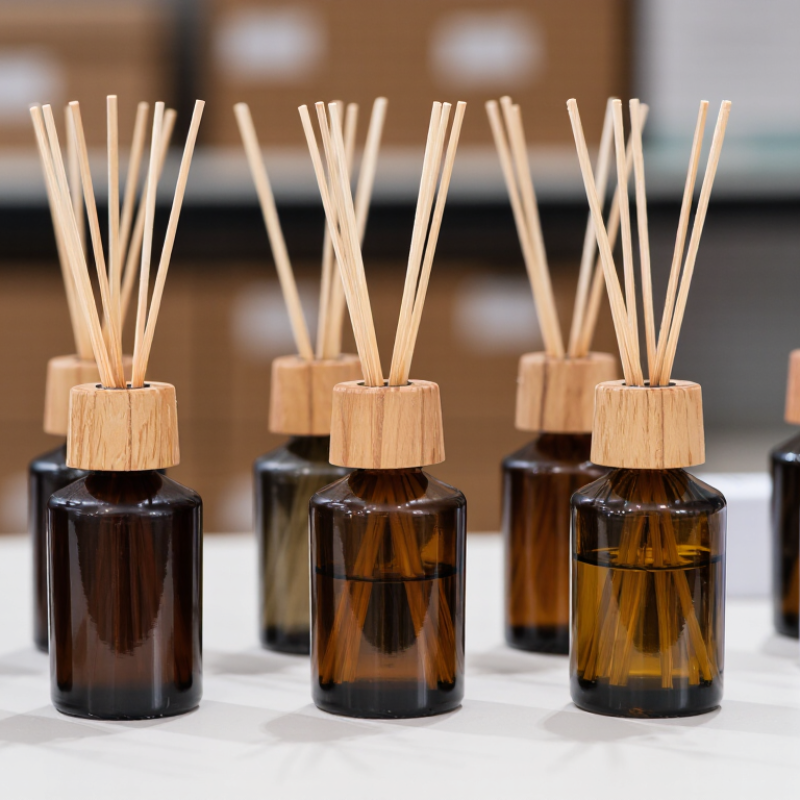
Before requesting quotes for custom amber glass reed diffusers in 2026, define the product’s use and target shelf life. Set the bottle capacity, dimensions, neck opening, and acceptable weight range. A 100 ml vessel, for example, needs enough shoulder space for stable filling and room for reeds. Choose amber glass for its warm appearance, but confirm the shade remains consistent across production samples. Glass protects contents from light to some extent; it does not replace suitable formulation testing.
Specify the finish, including gloss level, label area, and any screen-printed details. Details matter. Confirm that the closure fits the neck securely and that the diffuser base does not leak or soften coatings during storage. Ask suppliers to test the glass, stopper, fragrance base, and reeds together. Reed count, length, and material can change how quickly the scent disperses, so record the intended configuration rather than leaving it open-ended. Test it first.
Request pre-production samples and review them under ordinary lighting. Check for uneven color, sharp edges, bubbles, and labels that lift after handling. Record approved dimensions and tolerances in the purchase specification. Confirm carton protection, packing quantity, sample timing, production lead time, and minimum order quantity in writing. Some details may shift after the first sample; that is normal, but revisions should be documented before production begins. A clear brief reduces avoidable surprises without promising every batch will look identical.
| Requirement | Suggested Specification | What to Confirm with Suppliers | Sample or Quality Check | Sourcing Notes |
|---|---|---|---|---|
| Bottle capacity | Choose a nominal fill size such as 100 ml, 150 ml, or 200 ml, based on the intended use and retail format. | Request the bottle’s brimful capacity, recommended fill volume, overall dimensions, and allowable fill tolerance. | Measure sample bottles and verify the fill level leaves suitable headspace for the stopper and closure. | Confirm whether stated capacity refers to the intended fill volume or total brimful capacity. |
| Amber glass color | Specify the preferred amber shade using an approved physical sample or a defined color reference. | Ask whether the color comes from the glass composition or a surface coating, and confirm shade variation limits between production batches. | Compare samples under consistent lighting. Inspect for bubbles, stones, scratches, uneven color, and coating defects. | Amber glass can reduce some light exposure, but it does not guarantee complete protection from light or prevent fragrance changes. |
| Bottle weight and shape | Define target height, width, base diameter, glass weight, and acceptable dimensional tolerances. | Request a dimensioned drawing and confirmation that the bottle is stable on a flat surface. | Check for wobble, sharp edges, cracks, and consistency across multiple samples. | Custom molds can require additional tooling cost and longer development than standard bottle shapes. |
| Neck and closure fit | Specify the neck finish, stopper or plug type, and any outer cap or collar. | Confirm the neck-finish drawing, closure material, fit, and compatibility with the selected diffuser base and fragrance oil. | Test the assembled package for leakage during upright storage, handling, and shipping simulation. | Do not rely on nominal neck size alone; approve the bottle and closure as a matched set. |
| Reed configuration | Set reed material, length, diameter, number of reeds, and color. A trial might begin with 5–8 reeds, then be adjusted for performance. | Ask for material details, reed dimensions, and guidance on whether reeds are supplied dry or pre-treated. | Run a diffusion trial in the intended bottle with the final liquid, recording evaporation and scent performance over time. | Diffusion varies with the liquid formula, reed construction, room conditions, and number of reeds; a sample test is essential. |
| Fragrance and diffuser base | Define the intended fragrance profile, fill volume, base type, and target use environment before finalizing the reed specification. | Request the current Safety Data Sheet (SDS), applicable fragrance-use documentation, and formula compatibility information. | Check for separation, discoloration, sediment, leakage, and changes in diffusion during a stability trial. | Fragrance and base compatibility should be assessed in the final glass, closure, and reed combination. |
| Decoration and labeling | Choose from direct printing, screen printing, labeling, or other available decoration methods; specify artwork, placement, and finish. | Confirm printable area, color-matching method, artwork file requirements, and decoration durability. | Inspect adhesion, alignment, legibility, abrasion resistance, and consistency with the approved artwork proof. | Check that labels and inks remain suitable for the intended product and handling conditions. |
| Primary and shipping packaging | Define the inner protection, retail carton, dividers, and master-carton configuration. | Request carton dimensions, pack count, gross weight, and details of cushioning around the glass. | Conduct a practical transit test and inspect for breakage, leakage, scuffing, and carton deformation. | Packaging requirements may change with the shipping route, parcel carrier, and destination market. |
| Compliance documentation | Identify the destination markets and intended product claims before artwork and production approval. | Confirm which labeling, hazard communication, SDS, transport, and other market-specific documents apply to the finished product. | Review final labels and documents against the actual formula, package, and destination-market requirements. | Requirements depend on the product composition and country or region. Obtain advice from a qualified compliance professional where needed. |
| Minimum order and lead time | Request separate quotations for sample quantities, initial production, and repeat orders. | Ask for the minimum order quantity (MOQ), sample timing, production lead time, tooling charges, and reorder lead time. | Approve a pre-production sample and written specifications before authorizing a production run. | MOQs and lead times vary by bottle availability, custom tooling, decoration, season, and supplier capacity; obtain current written estimates. |
| Quality agreement | Document critical dimensions, appearance limits, fill tolerance, defect categories, and inspection method. | Agree on reference samples, sampling plan, inspection timing, and how nonconforming goods will be handled. | Retain an approved sample and compare production goods against it before shipment. | Clear acceptance criteria reduce disputes about color variation, cosmetic defects, and functional performance. |
Planning note: Specifications and timelines shown are starting points for supplier discussions, not universal industry standards. Confirm final values with current samples, written quotations, and destination-market requirements.
Hold each bottle against daylight and warm indoor light. Check the base for wobbling, the neck for chips, and the tint for uneven patches. Fill it, leave it upright, then lay it on absorbent paper. A bottle can look perfect and still leak.
Amber may look honey-colored in daylight and much browner indoors. This can change how a label appears. Small detail. Keep dated photos of samples under both types of light.
Test it in the actual bottle, not only on a paper strip. Note its scent when opened and again after several days with reeds inserted. Look for cloudiness, residue, or changes in appearance. I would not rely on one quick sniff.
Try the intended reed material and count in a small room. Too few may produce a faint scent; too many can make the space feel crowded. Room tests help, but they cannot predict every home.
Shake a packed unit gently and listen for bottle movement. Inspect the inserts around the bottle and stopper. Check that the glass does not shift against the box. It takes time. That test is still worth doing.
Review the label on the curved bottle under soft and bright light. Check that the text remains readable and the edges align. A polished sample may not match every production run, so confirm the allowed tolerances.
Request a current safety data sheet and a fragrance-use conformity document for the exact formula and intended use. Confirm that the documents match the product, not just a broad fragrance category. Paperwork can look complete while missing a key detail.
Ask for traceability records, batch codes, recent independent test reports, and written lead times. Confirm that tested samples match your specifications. Request details about leak checks, transport testing, and defect remedies. I would still inspect a pre-production sample. A tight reed opening is easy to miss.
Sourcing Custom amber glass reed diffusers for 2026 starts with a clear product brief. Define the bottle size, glass color and finish, fragrance profile, reed type, packaging style, target quantity, and quality expectations before contacting suppliers. Compare qualified manufacturers based on their capabilities, communication, production capacity, and willingness to provide transparent specifications. Request samples to evaluate the glass, fragrance, reeds, and packaging together, checking that the components suit your intended design and provide a consistent user experience.
Before placing an order, review relevant safety information, certifications, quality-control procedures, and supplier references. Discuss pricing in detail, including customization, sample costs, minimum order quantities, and packaging. Confirm production milestones, inspection arrangements, shipping methods, delivery estimates, and responsibility for unexpected delays. A carefully documented agreement helps align expectations and makes it easier to manage quality, timing, and costs from sampling through delivery.