Candles can turn a small shelf into a sensory experience: warm light, a clean glass jar, and a fragrance customers remember. The commercial opportunity is substantial. Grand View Research estimated the global candle market at USD 12.88 billion in 2023 and projected continued growth through 2030. Meanwhile, PLMA and Circana reported that U.S. private-label sales reached USD 271 billion in 2024. These figures show broad category demand, not guaranteed sales for any individual product. The distinction matters.
For retail teams, Retail brand private label candles offer control over scent, vessel, packaging, and price positioning. But a polished label cannot compensate for an inconsistent burn. Sourcing decisions should begin with clear product requirements: wax type, wick performance, fragrance strength, jar dimensions, target price, and order volume. Request samples, review burn-test results, and compare production timelines before committing. Small details count. A lid that loosens in transit or a label that lifts near a warm jar can undermine an otherwise strong product.
This guide explains how to assess manufacturers, compare quotations, and plan quality checks from sample approval to shipment. It also highlights questions worth asking about minimum order quantities, customization, packaging, and repeat-order consistency. Some trade-offs are unavoidable: a distinctive vessel may raise costs, while a lower minimum may limit customization. Sourcing is rarely perfect on the first try. Careful documentation and honest supplier communication help reduce surprises—and support a candle line customers can trust.
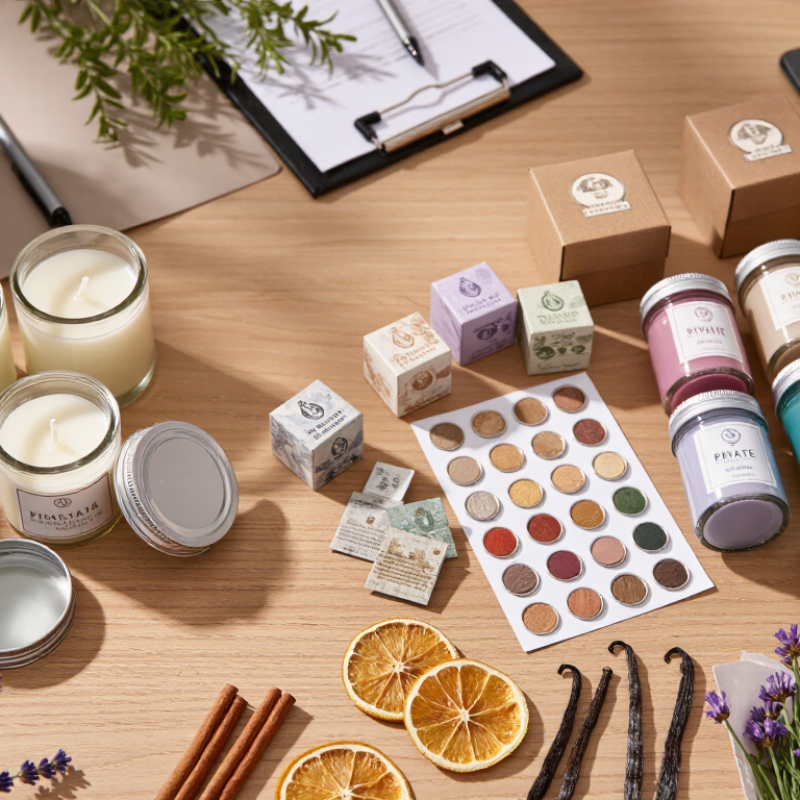
The National Candle Association reports that seven in ten U.S. households use candles. That figure signals a broad, familiar category, but it does not guarantee demand for every scent, format, or price point. Retailers should define the shopper before requesting quotes: Is the candle meant for a kitchen counter, a gift shelf, or a quiet evening routine? These occasions shape choices such as jar size, burn time, fragrance strength, and packaging.
Be specific when approaching private label suppliers. Request sample candles, written specifications, ingredient details, and test information for burn performance. Compare the wax appearance, wick behavior, scent after burning, and label readability in real store lighting. Small details matter. A lid that feels loose or a label that wrinkles can weaken an otherwise appealing product. Ask about minimum order quantities and production timelines, then check whether they fit seasonal buying plans.
The household-use statistic is a useful starting point, not a sales forecast. Test a small assortment with actual shoppers, and track sell-through by scent and size. Review feedback after the candle has been lit, not just smelled in the package. One limitation: a small test may reflect local preferences rather than wider demand. Treat results as evidence to refine, not proof that the next order will succeed.
About seven in ten U.S. households use candles. This suggests broad familiarity, not guaranteed demand for every scent or price. Treat it as a starting point.
Identify the occasion: a kitchen counter, gift shelf, or quiet evening. The use can guide jar size, burn time, fragrance strength, and packaging.
Ask for physical samples, written specifications, ingredient details, and burn-test information. Check the wax, wick, scent, and label under real lighting. Keep notes.
Burn it in a draft-free room. Record burn time, flame behavior, scent throw, and residue after each session. A desk test is not enough.
Specify color, dimensions, label placement, and acceptable variation. Ask how production consistency is checked. One approved sample cannot promise identical units.
Review packaging, setup, samples, cartons, and freight, not just unit price. Confirm payment terms and revision charges in writing. Small details matter.
Minimums may change with the vessel, fragrance, or label. Ask which choices raise the required quantity before finalizing the assortment.
Map artwork approval, material sourcing, pouring, curing, packing, and dispatch. Add time for delayed components or rejected samples. A tight calendar can look neat, but reality may disagree.
Test a small assortment and track sales by scent and size. Ask for feedback after shoppers burn the candle, not only smell it in the package. Local results may not represent wider demand.
Sourcing Retail brand private label candles starts with understanding customer demand and defining a clear product brief. Candle use is widespread in U.S. households, so retailers should identify the styles, scents, price points, and seasonal collections that best fit their shoppers. Specify the wax type, wick performance, fragrance strength, vessel material, and container dimensions, making sure the components work together and the finished candle performs consistently.
Next, evaluate suppliers for manufacturing quality, communication, and familiarity with relevant fire-safety and labeling standards, including ASTM F2417 and ASTM F2058. Request samples to assess burn quality, scent, appearance, and packaging before confirming costs, minimum order quantities, and production schedules. Plan inventory well ahead of the holiday season, when candle purchases often rise sharply; estimates indicate that about 35% of annual candle sales occur around Christmas. Careful testing and realistic lead times can help a retail brand launch a dependable collection while reducing surprises during production.