Starting a private label room spray business in 2026 can turn a simple fragrance idea into a practical consumer brand. Customers want homes that feel fresh, calm, and personal. A well-designed room spray can serve that need without requiring a large retail space or complex manufacturing setup. However, success depends on more than attractive bottles and pleasant scents.
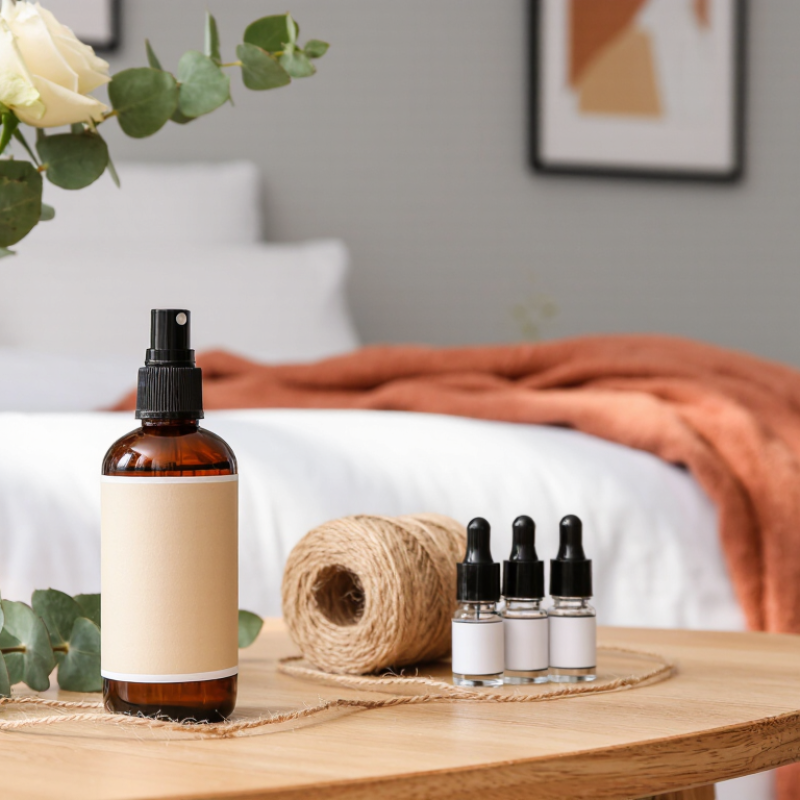
Private label room sprays allow entrepreneurs to work with experienced manufacturers while building their own identity. You can select fragrance profiles, bottle styles, labels, and packaging that match a clear customer group. Imagine a small amber bottle with a matte label, packed for a minimalist bedroom collection. Details like spray quality, scent strength, ingredient transparency, and shipping protection can shape the customer experience.
Research matters. Study competing products, review supplier testing documents, and request samples before placing a large order. Test each spray in real spaces, including bathrooms, bedrooms, and entryways. A fragrance that smells elegant on a paper strip may feel too strong in a small room. That happens.
Reliable suppliers should explain their production process, quality controls, minimum order quantities, and product documentation. They should also support accurate labeling and responsible marketing claims. Avoid promising health benefits without credible evidence. Your brand must earn trust gradually, through consistent products and honest descriptions.
This guide explores practical steps for planning, sourcing, branding, pricing, and launching your room spray line in 2026. Some decisions will need revision. That is normal. A careful launch learns from customer feedback, production limits, and the realities of daily operations.
A private-label room spray business needs a clear concept before selecting bottles, fragrances, or suppliers. “Fresh home fragrance” is too broad. A stronger concept might focus on compact apartments, bedtime rituals, pet-friendly households, or low-waste living. My early concept was too general, and customer interviews exposed the problem: people wanted a specific mood, not another vague “clean” scent.
Market evidence supports careful positioning. Grand View Research estimated the global home fragrance market at approximately USD 13 billion in 2023, with continued growth expected through 2030. The report also identifies changing lifestyles and interest in pleasant indoor environments as important demand factors. Meanwhile, a 2024 consumer study from the National Candle Association found that fragrance remains a major purchase consideration for home scent products. Room spray buyers may value instant results, but they still judge the experience through scent strength, spray texture, packaging, and perceived safety.
Define one primary customer first. A busy renter may prefer a 100 ml bottle, quick-drying mist, and discreet packaging. A wellness-focused buyer may expect botanical language, softer scent profiles, and transparent ingredient information. Avoid unsupported health claims. Test three scent directions with real users, recording preferences after several hours, not only after the first spray. Small details matter. Does the cap leak in a handbag? Does the label wrinkle near a bathroom sink? Some assumptions will fail. That is useful evidence, not wasted effort. Cite supplier specifications and reputable safety guidance before finalizing the product concept.
Safe, marketable formulas begin with disciplined product development. Grand View Research forecasts the global air freshener market to grow at about 3.8% annually through 2030. Fortune Business Insights reports similar momentum across the broader home fragrance sector. Buyers still want pleasant scent, but they also expect clean labels, controlled performance, and responsible packaging.
Start with a clear formula brief. Define the fragrance load, spray volume, drying time, and target room size. A typical room spray may combine alcohol, purified water, fragrance, and a suitable solubilizer. Some formulas also need preservation support. Never assume a clear liquid is stable. Test separation, color change, odor drift, nozzle blockage, and bottle compatibility at different temperatures.
Small details build trust.
Request current IFRA conformity documents and allergen information from fragrance suppliers. Then review local labeling, flammability, transport, and consumer-safety requirements. A professional laboratory should check stability and microbial risk before production. In-house testing still matters. Spray the product on glass, painted wood, fabric, and tile, then inspect residue after drying.
Product variations can include linen sprays, low-scent options, seasonal profiles, and refill formats. Each variation needs separate performance checks. A lighter fragrance is not automatically safer.
I still question “natural” claims when they lack measurable definitions. Private label success depends on evidence, not attractive wording. Record every batch, including scent temperature, fill weight, and nozzle performance. Small errors become expensive at scale.
How to Start a Private Label Room Spray Business in 2026?
Private label room sprays can enter a growing category. Grand View Research valued the global home fragrance market at about $13.2 billion in 2023. It forecasts roughly 5.9% annual growth through 2030. Choose suppliers with documented formulation experience, not only attractive catalogs. Request ingredient lists, safety data sheets, batch records, stability testing, and an IFRA conformity certificate. A low minimum order can help testing, but it may signal limited production capacity. I have seen attractive samples fail after three weeks because the trigger clogged.
Packaging affects both performance and customer trust. Select bottles that resist alcohol-based formulas, leakage, and fragrance interaction. Test the actuator with at least 200 repeated sprays. Recycled content is useful, but confirm its percentage and compatibility. Smithers reports continued growth in sustainable packaging demand, yet sustainability claims still need evidence. Use clear labels, accurate net volume, storage instructions, and market-specific warnings. Suppliers should explain filling tolerances and quality checks in writing.
Tips: Compare three suppliers using the same brief. Order samples from different production lots. Keep one sealed sample for future comparison. Ask for pilot production before a large order. Review delivery damage, spray mist, scent stability, and label alignment. Do not choose packaging by appearance alone. My own preference would be a simpler bottle with a reliable sprayer, though that choice may look less premium on a product page. Build a small launch budget for failed samples, redesigns, and delayed shipments.
| Production route | Best suited for | Typical minimum order range* | Indicative production lead time* | Customization level | Key checks before ordering |
|---|---|---|---|---|---|
| Ready-made private label | First-time sellers testing demand with an existing formula and scent selection. | Often about 100–500 units per scent or design; supplier-dependent. | Approximately 2–6 weeks after artwork approval and deposit. | Low to moderate: usually choose from existing formulas, scents, and stock packaging. | Request the ingredient information, sample, safety data sheet (SDS), fill volume, packaging specifications, and written MOQ. |
| Custom formula with a contract manufacturer | Brands needing a distinct formula, scent brief, or performance specification. | Often about 1,000–5,000 units per formula; development work may have separate fees. | Approximately 8–16 weeks or longer, including formulation and testing. | High: fragrance, base, and packaging can often be specified, subject to feasibility. | Clarify ownership of the formula, sample approval steps, stability and compatibility testing, and change-control terms. |
| Contract filling of an approved formula | Businesses that already have a formula and need a facility to blend or fill product. | Commonly several hundred to a few thousand units; equipment and component minimums apply. | Approximately 4–10 weeks after components and formula are approved and available. | Moderate: control over formula may be greater, while filling and pack-out depend on facility capabilities. | Confirm the facility accepts the formula, provides batch records, and can handle the chosen liquid and packaging. |
| Small-batch in-house production | Local or direct-to-consumer pilots where the operator can manage controlled production. | No standard supplier MOQ; practical batch size depends on equipment, process controls, and local rules. | Variable; allow time for sourcing, process validation, documentation, and quality checks. | High operational control, with greater responsibility for consistent production and records. | Check applicable manufacturing, workplace-safety, labeling, storage, and insurance requirements before selling. |
| Decision area | Common planning options | Practical considerations | Action before production |
|---|---|---|---|
| Bottle capacity | 60–120 mL (2–4 fl oz) for compact formats; 120–240 mL (4–8 fl oz) for larger home-use formats. | Capacity affects shipping weight, shelf presence, unit economics, and the number of uses per bottle. | Compare filled-product weight and packed-box dimensions using production samples. |
| Bottle material | Glass or compatible plastic, selected for the formula and intended use. | Formula ingredients can affect material compatibility; glass is heavier and can break in transit. | Run compatibility and leakage checks with the actual formula, closure, and storage conditions. |
| Sprayer and closure | Fine-mist trigger or pump sprayer with a matching neck finish and suitable closure. | Spray pattern, output per actuation, dip-tube length, and seal performance affect the customer experience. | Test the sprayer with the finished formula and check for leaks after transport simulation. |
| Label and carton | Pressure-sensitive label, direct print, or retail carton, depending on order size and presentation needs. | Label stock and adhesives should suit the bottle surface, handling, and storage conditions. | Approve a physical proof and verify required warnings and product information for each sales market. |
| Formula and transport | Water-based or alcohol-containing room spray; shipping treatment depends on the finished formulation. | Some alcohol-containing products may be classified as flammable or otherwise subject to transport restrictions. | Obtain the current SDS and confirm classification, packaging, and carrier acceptance for each shipping route. |
| Quality and compliance | Batch specifications, traceability records, ingredient documentation, and market-appropriate labeling. | Requirements vary by country and by product claims; avoid implying disinfecting or health benefits without appropriate substantiation and authorization. | Identify the target market and check its applicable chemical, consumer-product, labeling, and advertising rules before launch. |
*Ranges are indicative planning estimates, not guarantees or supplier quotations. Actual minimums, costs, and schedules depend on formulation, component availability, testing, artwork approval, order volume, and destination market.
Starting a private label room spray business in 2026 requires more than attractive packaging. Your brand should communicate one clear promise, such as calm evenings, fresh workspaces, or simple home rituals. Choose a focused scent range instead of launching too many variations. Test sample bottles for leaking, nozzle performance, scent consistency, and label durability. Small details matter.
Pricing must include fragrance materials, bottles, labels, filling, packaging, shipping, storage, payment fees, testing, and expected returns. Then add a realistic profit margin. Compare similar products, but do not copy their pricing blindly. A low price can weaken your positioning and leave no budget for customer support. I would review the numbers monthly. Costs often change faster than expected.
Tips:
Keep written supplier specifications and batch records. Request safety documentation for every formula. Check labeling rules in each sales region, including ingredients, net quantity, warnings, responsible-party details, and allergen disclosures where required. Confirm whether your product needs transport or flammability statements. Avoid unsupported claims such as non-toxic
, chemical-free
, or safe for everyone
. Consult a qualified regulatory professional before selling across borders. Rules differ.
Create a simple compliance file for each scent. Include the formula version, test results, supplier documents, label approval, and complaint records. Use controlled production procedures, even with small batches. A neat brand cannot compensate for inconsistent quality. My own planning would include a final review before every launch, because overlooked wording can create expensive problems. Mistakes are possible. Better systems reduce them.
Launching a private label room spray business starts with a focused product range, not dozens of fragrances. Choose three distinct profiles, such as fresh linen, citrus herb, and warm wood. Work with a manufacturer that provides batch records, ingredient documentation, stability testing, and compliant safety information. Check local rules for labeling, flammability warnings, packaging, and shipping before accepting orders.
Keep the formula practical. A spray that smells strong in the bottle may feel harsh in a small bedroom. Test each sample in real spaces, including bathrooms, entryways, and fabric-safe areas. My first testing round used attractive packaging but ignored the trigger quality. It leaked during delivery. That mistake changed my quality checklist. Record spray pattern, scent strength, drying time, and customer feedback before production.
Marketing should show the product in use. Film a morning room reset, a guest-room preparation, or a linen cabinet refresh. Use clear claims, and avoid suggesting medical or disinfecting benefits without verified evidence. Offer sample sizes through a simple online store, then track repeat purchases, review themes, and return reasons. Scale carefully by reordering proven scents, improving cartons, and negotiating better minimum quantities. Keep one reliable supplier and one backup option. Growth can expose weak systems quickly.
Start with three distinct profiles, such as fresh linen, citrus herb, and warm wood. A focused range is easier to test and manage. Too many choices can confuse customers.
Test sample bottles for leaks, nozzle performance, scent consistency, and label durability. Spray each sample in bedrooms, bathrooms, entryways, and fabric-safe areas. Small details matter.
Include fragrance materials, bottles, labels, filling, packaging, shipping, storage, payment fees, testing, and returns. Add a realistic profit margin afterward. Review the figures monthly. Costs can change quickly.
Keep written supplier specifications and batch records for every scent. Record spray pattern, scent strength, drying time, and customer feedback. A neat label cannot fix weak quality control.
Include the formula version, test results, supplier documents, approved labels, and complaint records. Request safety documentation for every formula. My checklist may still miss something, so a professional review is wise.
Requirements can include ingredients, net quantity, warnings, responsible-party details, and allergen disclosures. Check the rules in every sales region. Rules differ.
Avoid unsupported claims such as “non-toxic,” “chemical-free,” or “safe for everyone.” Do not suggest medical or disinfecting benefits without verified evidence. Clear wording protects trust.
Show the spray in realistic settings, such as a morning room reset or linen cabinet refresh. Offer sample sizes through a simple online store. Track repeat purchases, review themes, and return reasons.
Reorder scents with proven demand, improve cartons, and negotiate better minimum quantities. Keep one reliable supplier and a backup option. Growth can reveal weak systems quickly.
Starting a private label room spray business in 2026 begins with a clear concept and a well-defined target market. Decide whether your products will focus on relaxation, freshness, seasonal experiences, home styling, or another consumer need. Develop safe, appealing formulas with thoughtful scent profiles and practical variations, such as different sizes, fragrance strengths, or themed collections. Test product performance, stability, packaging compatibility, and user experience before moving toward a full launch.
Next, evaluate private label suppliers based on formulation support, minimum order quantities, production quality, packaging choices, lead times, and transparent documentation. Build a distinctive brand identity, calculate pricing by considering production, packaging, shipping, marketing, and operating costs, and prepare accurate labels and required compliance materials for your target markets. Once ready, launch through suitable sales channels, create educational and visually engaging marketing content, gather customer feedback, and monitor key performance indicators. With consistent quality, responsible operations, and controlled inventory growth, Private label room sprays can develop into a scalable and profitable product business.