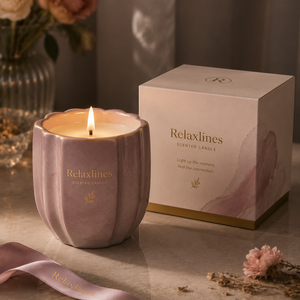
As an established global CE Certified Scented Candles Manufacturer & Exporter, our manufacturing infrastructure bridges the gap between artisanal olfactive craftsmanship and rigorous industrial production. Operating from fully audited ISO 9001 and BSCI-compliant facilities, we supply premium retail brands, luxury hospitality groups, subscription services, and international department stores across North America, Europe, Australia, and Asia.
Our enterprise advantages stem from full vertical integration. Unlike assembly-only suppliers, we maintain absolute control over every stage of production—from hydrogenated plant oil selection and wick capillary speed testing to automated hot-wax pouring and climate-controlled curing tunnels.
1. Strict CE & EU Safety Compliance
Every batch undergoes internal and third-party laboratory verification for European Standards: EN 15493 (Fire Safety), EN 15494 (Product Safety Labels), and EN 15426 (Soot Emission Behavior). We provide comprehensive REACH SDS and CLP chemical labeling documentation for smooth customs clearance.
2. Proprietary Scent Formulation Library
Access over 250 master-blended fragrance profiles formulated in accordance with the 51st IFRA (International Fragrance Association) Amendments. Our fragrance engineers utilize Gas Chromatography-Mass Spectrometry (GC-MS) to guarantee scent stability and cold/hot throw consistency.
3. Flexible Order Scalability & Speed
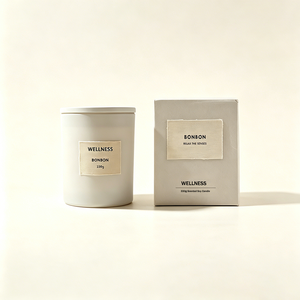
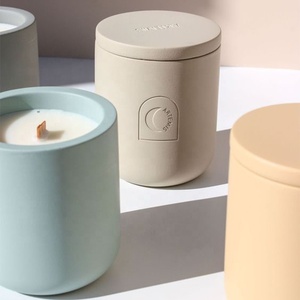
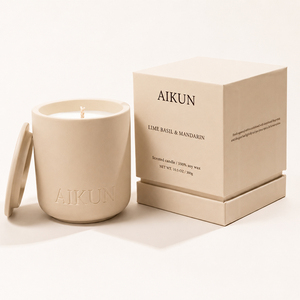
Eliminate long lead-time friction. With standardized vessel stock (amber apothecary glass, ceramic tumblers, matte white glass) maintained in-house, custom branded private label orders achieve digital artwork proofing within 48 hours and rapid dispatch cycles.
Scented Candle Product Development & Technological Trends
The commercial home fragrance landscape is undergoing a structural transition driven by environmental regulations, eco-conscious consumer expectations, and olfactory science. Importers and brand owners must adapt to these critical technical developments:
A. Transition to 100% Bio-Based Hydrogenated Waxes
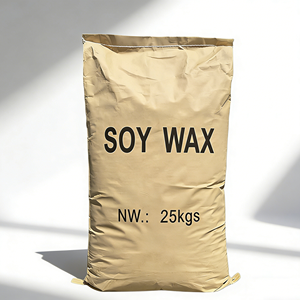
Traditional paraffin wax derived from petroleum refining is rapidly being phased out across western retail sectors. Contemporary buyer specifications prioritize 100% pure botanical soy wax, coconut wax, and hydrogenated rapeseed oil matrices. Soy and coconut waxes exhibit a lower melting point (48°C–54°C), creating a larger molten wax pool upon ignition. This structural characteristic enhances volatile organic compound diffusion, producing superior hot scent throw without generating toxic benzene or toluene emissions.
B. Precision Wick Engineering: Cotton vs FSC-Certified Wood
Combustion dynamics rely heavily on capillary action. Modern manufacturing replaces zinc-core wicks with unbleached, ring-spun flat cotton wicks woven with paper filaments, or FSC-certified softwood wicks. Wood wicks generate an audible acoustic crackle and create a horizontal planar flame profile that prevents tunneling in wide-diameter ceramic or glass vessels.
C. Micro-Encapsulation and High-Load Fragrance Retention
Historically, adding fragrance oil above 6% by weight compromised structural wax integrity, leading to surface bleeding, frosting, and uneven burning. Advanced emulsification techniques now allow our production lines to achieve up to 10%–12% fragrance oil loads while preserving a smooth surface finish and preventing phase separation during transport through varying climate zones.
Future Procurement & Global Sourcing Trends (2025–2030)
Global distributors and retail procurement executives must design their supply chain strategies around incoming European and North American regulatory mandates. Key trends shaping procurement include:
Strict EU Packaging and Packaging Waste Regulation (PPWR) Compliance: Directives are demanding higher recyclable content in candle containers. Sourcing trends favor heavy-walled reusable glass, ceramic tumblers with multi-use wooden lids, and biodegradable unbleached Kraft paper gift boxes.
Complete Supply Chain Transparency & Traceability: Retail chains require certified proof of origin for soy wax to prevent sourcing from deforestation-linked agricultural land. Our factory provides full traceability documentation for all botanical waxes.
Cross-Category Coordinated Scent Lines: B2B buyers are increasingly moving away from standalone candle SKUs toward multi-product olfactory collections. Combining 8 oz apothecary candle jars, 4 oz amber glass reed diffusers, and matching room sprays under a unified private label scent identity increases average retail cart values by up to 35%.
Low-MOQ Testing Before High-Volume Scaling: Brands are reducing inventory carry risks by ordering smaller initial batches (100 to 500 units per scent profile) to validate sell-through rates online before placing 10,000+ unit container load orders.
Technical Wax Comparison Matrix for B2B Importers
Wax Type
Melting Point
Max Scent Load
Soot Level (EN 15426)
Environmental Profile
Primary Market Suitability
100% Soy Wax (Soybean Blend)
48°C – 52°C
10%
Ultra Low (< 0.05 index)
Renewable / Biodegradable
Mass Retail, Premium Eco-Brands
Coconut Soy Hybrid Wax
45°C – 50°C
12%
Near Zero
Sustainable / Fast-Renewing
Luxury Boutique, Spa Collections
Beeswax & Plant Oil Blend
61°C – 65°C
8%
Extremely Low
Natural / Honey Byproduct
High-End Wellness & Apothecary
Refined Paraffin (Comparison)
56°C – 62°C
8%
Moderate to High
Petroleum Synthetic
Budget Mass-Market (Phasing Out)
B2B Sourcing & Manufacturing FAQ
Find authoritative answers regarding our CE certification protocols, OEM capabilities, custom branding, and shipping logistics.
What specific European safety certifications do your scented candles hold?
Our candles are engineered and tested in compliance with standard European Union safety protocols. This includes EN 15493 (which specifies requirements for fire safety during burning to prevent high flame heights and container tipping), EN 15494 (standardized safety pictogram packaging labels), and EN 15426 (measuring soot emission behavior). We also supply safety data sheets (SDS) complying with REACH and CLP (Classification, Labelling and Packaging) regulations.
What is the minimum order quantity (MOQ) for custom private label orders?
We maintain a highly flexible manufacturing scale. For stock vessel formats (such as standard amber glass jars or matte ceramic tumblers with in-house fragrance oils), initial program MOQs can start at low quantities (sample runs to 100 units) to allow market testing. For fully customized vessel molding, custom color lacquering, or bespoke fragrance development, typical production runs range between 500 and 1,000 units per SKU.
Can you create custom bespoke fragrances according to our brand specifications?
Yes. Our in-house fragrance chemists can match benchmark scent profiles or formulate entirely original top, middle, and base note structures. All custom fragrance oils undergo strict flashpoint testing, hot throw stability evaluation, and IFRA safety audit approval before mass production.
How do you handle artwork design, labeling, and packaging customization?
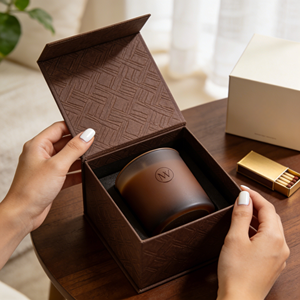
We offer full graphic design and pre-press label services. Clients can supply vector logos, and our design team will generate print-ready, regulatory-compliant artwork containing mandatory warning safety icons and net weight markings. Digital proofs are typically delivered within 48 hours. Options include screen printing, metallic foil stamping, embossed linen labels, and rigid custom gift boxes.
What is the average production lead time for export shipments?
Once artwork is approved and sample wicks pass stability testing, standard production runs take 15 to 25 business days depending on volume and packaging complexity. We manage global export logistics, including palletization, thermal wrapping for container transport, and customs paperwork preparation.
Partner with a Trusted CE Certified Candle Manufacturer
Elevate your product line with compliant, clean-burning, high-fragrance soy candles. Request a product catalog, scent sample kit, or custom OEM quote today.