Custom OEM/ODM production runs engineered with clean-burning plant-based wax, optimized thermal soot control, and accredited European safety compliance.
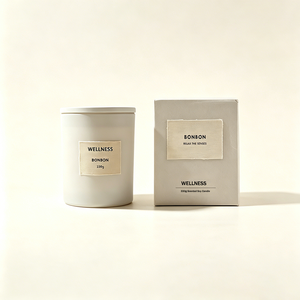
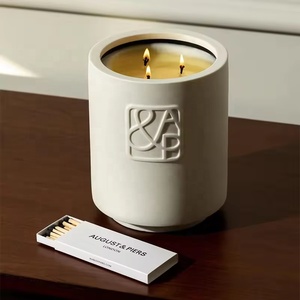

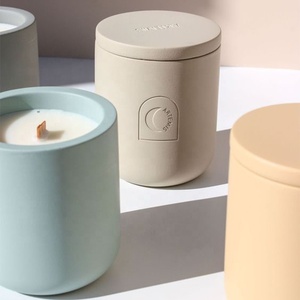

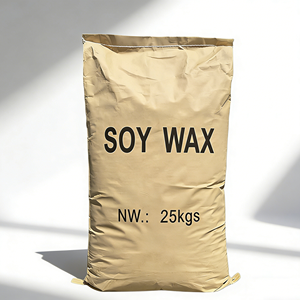
An in-depth evaluation of chemical wax stability, European regulatory frameworks, and scalable OEM production methodologies for global importers and brand owners.
Compliance with the European Economic Area (EEA) safety parameters requires meticulous validation. Our factories operate in strict adherence to EN 15493 (Specification for Fire Safety), EN 15494 (Product Safety Labels), and EN 15426 (Specification for Sooting Behavior). Every production batch undergoes standardized thermal camera testing to verify flame height stability (below 75mm) and non-spilling wax pool boundaries.
Commercial soy wax is derived from hydrogenating soybean oil to elevate its melting point from liquid state to a stable solid (typically between 48°C and 54°C). Our chemical engineers adjust iodine values (IV) to prevent polymorphic crystallization ("frosting") while maintaining an optimal viscosity profile during molten fill phases. This ensures uniform cooling, glass adhesion, and smooth surface topography without petro-chemical additives.
Fragrance retention in soy wax is restricted by crystalline intermolecular space. By engineering custom emulsification protocols during the 65°C scent injection phase, our OEM facility achieves high oil loading ratios of 8% to 12% without fragrance bleeding or wick clogging. We utilize Gas Chromatography-Mass Spectrometry (GC-MS) to ensure volatile aroma compounds diffuse evenly across the entire burn cycle.
Unlike paraffin wax derived from petroleum heavy-bottom cuts—which release aromatic hydrocarbons, toluene, and benzene—100% natural soy wax consists of long-chain fatty acid triglycerides. When paired with unbleached, lead-free organic cotton wicks featuring flat-braided tension cores, the combustion yield produces predominantly water vapor and carbon dioxide. Our testing logs show a soot index lower than 0.05 per hour, significantly below the max European norm of 1.0 per hour allowed under EN 15426.
Quantitative technical benchmarks applied across all private label OEM/ODM soy candle orders.
| Performance Standard | Test Methodology / Standard | Factory Technical Specification | Commercial Value for Importers |
|---|---|---|---|
| Fire Safety Compliance | EN 15493:2019 Directive | Self-extinguishing wick design; zero secondary ignition of vessel or wax pool. | Mitigates consumer liability and passes EU customs clearance without detention. |
| Sooting Behavior | EN 15426:2018 Protocol | Average soot index < 0.05 hour⁻¹ verified via optical density glass plate reader. | Prevents wall staining; appeals to premium eco-conscious luxury retail buyers. |
| Chemical Safety & CLP | EC No 1907/2006 (REACH) / CLP | 0% Phthalates, 0% Parabens, Heavy metal free. SDS sheets supplied per fragrance. | Simplifies regional safety labeling and compliant retailer placement across Europe. |
| Fragrance Yield Index | IFRA 50th Amendment Standards | Optimum dosage up to 12% using high-flashpoint (>75°C) essential & synthetic blends. | Delivers sensory throw in large spaces, validating premium retail price points. |
| Thermal Shock Resistance | ASTM C149 Container Test | Soda-lime frosted glass & ceramic vessels rated for ΔT of 60°C gradient resistance. | Eliminates glass container fracturing during burn tests and logistics transit. |
Market intelligence for B2B buyers, retail brand developers, and commercial procurement officers navigating changing regulatory frameworks and consumer dynamics.
Global retailers are transitioning away from non-renewable paraffin paraffin-wax bases. By 2026, European Union regulations will demand full Scope 3 emissions disclosure and raw material origin verification for imported candles. Our soy factories utilize 100% non-GMO soybeans cultivated under zero-deforestation certification protocols, allowing B2B buyers to verify supply chain sustainability from agriculture to finished packaging.
Modern luxury packaging is shifting toward circular economic design. Importers are requesting heavy-wall ceramic, alabaster, and reusable amber apothecary glass vessels. Our OEM manufacturing facility supports multi-use vessel manufacturing paired with modular wax refill inserts, cutting long-distance transit weight costs while providing end consumers with sustainable, repeatable luxury product lifecycles.
Under strict European Chemicals Agency (ECHA) enforcement, candle labels are no longer treated as simple home decor items, but as complex chemical mixtures. Importers face severe fines if warning pictograms, UFI (Unique Formula Identifier) codes, and allergen lists miss exact regulatory parameters. We supply turn-key regulatory artwork preparation, generating compliant CLP labeling integrated directly into your private brand artwork.
Why leading global brands choose our production facilities for scalable, compliant, and cost-optimized candle lines.
Air bubbles and thermal cavities destroy burn consistency. Our automated liquid wax dosing lines operate under controlled temperature (+/- 1°C) and partial vacuum conditions, preventing sinkholes around the wick and delivering structural density across every vessel batch.
Collaborating with top-tier international fragrance houses (Givaudan, Firmenich, IFF), our factory maintains over 250 ready-to-fill fragrance oils compliant with IFRA standards. We also offer GC-MS reverse engineering to replicate or develop custom signature fragrances tailored to your brand identity.
We bridge the gap between boutique custom brands and high-volume retail. Importers can validate new market concepts with zero-friction low minimum initial production runs, scaling seamlessly into 50,000+ unit monthly container shipments without re-tooling delays.
Comprehensive answers regarding order logistics, quality assurance, laboratory testing, and private label customization.
Every export consignment includes a full Technical Compliance Dossier: EN 15493 Fire Safety Test Certificate, EN 15426 Soot Density Report, IFRA Conformity Certificates, Safety Data Sheets (SDS) under REACH regulations, CLP Labeling Specifications, and Certificate of Analysis (CoA) for raw soy wax purity.
Tropical shipping routes present high humidity and thermal fluctuation. We formulate our soy wax with controlled botanical emulsifiers that lock fragrance oils within the lipid lattice, preventing oil sweating up to 45°C. Additionally, master cartons are lined with moisture-vapor barrier foils and thermal insulation blankets.
Yes. Our factory accepts customer-supplied containers, provided they pass our internal thermal shock (ASTM C149) and wick anchor adhesion testing. For client-supplied fragrances, our lab performs flashpoint testing and burn trials to optimize appropriate wick sizing prior to mass assembly.
Standard prototype samples are created and dispatched within 48 to 72 hours. Full mass manufacturing typically requires 15 to 25 business days depending on custom vessel finishing (hot stamping, electroplating, custom ceramic glazing) and master packaging approval.
Wood wicks require precise thickness matching (0.5mm to 0.8mm) based on vessel diameter and oil viscosity to maintain an even burn pool without excess carbon buildup. Cotton wicks utilize directional braiding to bend into the flame zone, promoting complete carbon consumption. We calibrate both options rigorously per formula.
Connect directly with our senior OEM manufacturing engineering team. Get custom sample formulations, factory-direct wholesale pricing, and full European regulatory guidance within 24 hours.
Inquire Now