Explore high-performance home fragrance containers, engineered for optimal thermal stability, high scent load integration, and luxury aesthetic finishing.
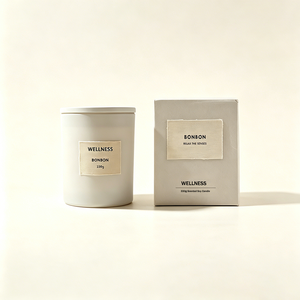
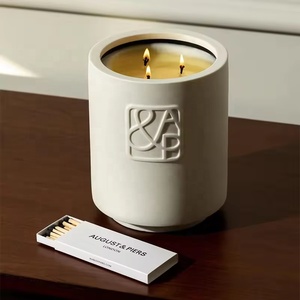
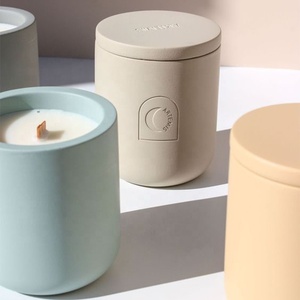
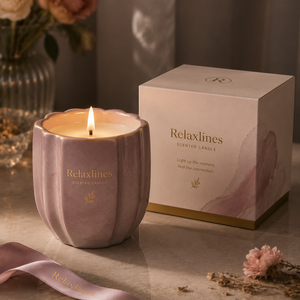
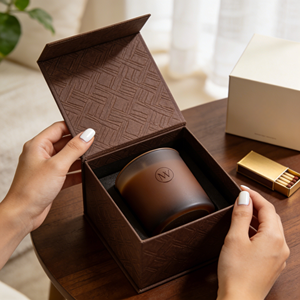
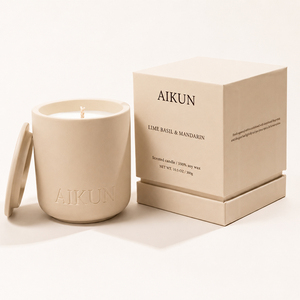
Global supply chains for luxury home fragrance, cosmetics, food preservation, and wellness products have increasingly centered on China’s advanced glass manufacturing clusters. The shift from low-cost mass production to high-precision, technical-grade glass synthesis has established Chinese manufacturers as indispensable partners for international brand owners, procurement managers, and OEM/ODM private-label enterprises.
When evaluating China glass jars suppliers and exporters, professional buyers must understand the underlying material physics and manufacturing methodologies. Modern glass container production is divided into distinct material chemical matrices: High-Silica Soda-Lime Glass, Borosilicate 3.3 Glass, and Formulated Opal Glass. Each matrix exhibits vastly different coefficient of thermal expansion (CTE), mechanical tensile strength, and optical clarity indices.
Information Gain Insight: Glass jars intended for scented candle pouring require a minimum Thermal Shock Resistance ($\Delta T$) of 90°C to 120°C. Standard commercial soda-lime glass without controlled annealing often fails under localized flame thermal stress, leading to structural micro-fracturing. Premium Chinese exporters utilize controlled IS (Individual Section) forming machines paired with extended recirculating lehr annealing ovens to relieve internal hoop stress.
To assist brand directors and sourcing specialists in selecting the optimal substrate for their product lines, the technical matrix below outlines performance parameters across standard glass and ceramic alternatives:
| Substrate Category | Chemical Base Formulation | Thermal Shock ($\Delta T$) | Hydrolytic Resistance | Primary B2B Application |
|---|---|---|---|---|
| High-Purity Soda-Lime | $\text{SiO}_2$ (72%), $\text{Na}_2\text{O}$ (14%), $\text{CaO}$ (10%) | 60°C – 90°C | Type III (USP / EP) | Mass-Market Candles, Pantry Jars, Cosmetics |
| Borosilicate 3.3 | $\text{SiO}_2$ (81%), $\text{B}_2\text{O}_3$ (13%), $\text{Na}_2\text{O}$ (4%) | >160°C | Type I (Highest Neutrality) | Luxury Scientific Vessels, High-End Skincare |
| High-Density Ceramic | Aluminosilicate Clay / Kaolin Base | >180°C | Impermeable Glaze | Luxury Embossed Aromatherapy Vessels |
| Post-Consumer Recycled (PCR) | Soda-Lime with 30%–70% Recycled Cullet | 70°C – 85°C | Type III | Sustainable & Eco-Friendly Packaging Lines |
The production of premium amber, frosted, translucent, and matte-black glass vessels involves sophisticated post-forming surface treatments. Following the IS machine molding process, glass jars pass through a thermal annealing lehr where temperatures are gradually ramped down from 560°C to ambient room temperature over 120 minutes. This process neutralizes residual stress points along the jar wall and heel.
Secondary processing techniques offered by premier Chinese exporters include:
Eco-friendly water-borne organic coatings that deliver velvet-touch matte finishes, UV-blocking opaque tones, and high gloss gradient effects without VOC off-gassing.
Immersion in fluorosilicic bath solutions to produce permanent translucent frost textures resistant to fingerprint oil staining and scratching during automated filling.
High-temperature vitreous enamel printing fired at 580°C, fusing logos directly into the glass matrix for permanent chemical and scratch resistance.
Partnering directly with a leading Chinese glass jar exporter offers substantial operational advantages over working with regional distributors. By consolidating mold development, glass melting, secondary decoration, and custom fragrance/wax pouring under unified vertical management, global brands eliminate middleman markups and reduce time-to-market by up to 60%.
Leading manufacturing hubs maintain state-of-the-art tooling centers capable of engineering custom 3D parametric glass molds within 48 hours. Whether your brand requires bespoke neck geometry, specialized lid fitments (such as airtight silicone-ring Kraft paper lids, bamboo covers, or heavy metallic screw caps), or proprietary base embossing, internal tooling capabilities ensure rapid prototyping before full-scale IS machine sampling.
Flexible production scheduling allows boutique brands to initiate private-label programs at true low minimums (starting from stock jar customization) while easily scaling to multi-container monthly runs.
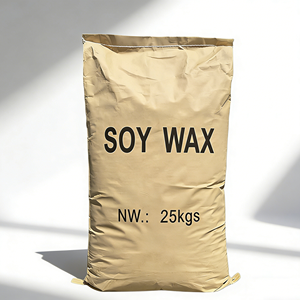
In-house pouring lines accommodate pure soy wax, coconut-apricot blends, microcrystalline blends, and 250+ essential fragrance oil notes with up to 12% fragrance throw saturation without sweating.
Every batch undergoes automated optical inspection for seeds, blisters, and neck deformation, followed by polarized light stress analysis and ASTM thermal shock testing.
Compliance is non-negotiable when exporting glass containers into North American and European consumer markets. Verified Chinese exporters operate under rigorous international quality management protocols:
The global glass packaging sector is undergoing a profound structural transformation driven by regulatory mandates, corporate ESG commitments, and shifting consumer expectations. Buyers seeking long-term competitive advantages must align their procurement strategies with four key market trends shaping Chinese glass manufacturing:
European Union regulations and US state-level legislation increasingly penalize single-use virgin packaging. In response, premier Chinese glass foundries have re-engineered furnace charge ratios, incorporating up to 70% post-consumer recycled cullet. Utilizing PCR cullet lowers furnace melting temperatures by 200°C, drastically reducing Scope 1 operational carbon emissions while providing brands with an authentic eco-friendly marketing story.
Historically, luxury perception was tied to heavy glass bases. However, rising international maritime freight tariffs and carbon-taxation models have accelerated demand for Ultra-Lightweight (ULW) container geometry. Using Finite Element Analysis (FEA) computer simulation, Chinese engineers redistribute glass mass, reinforcing critical strain points at the shoulder and heel while reducing overall vessel mass by 18% to 25% without compromising burst pressure resistance.
High-end fragrance and cosmetic brands are adopting laser-ablated QR codes and embedded micro-NFC tags on glass jar bases. Chinese exporters are integrating automated laser marking directly on the hot-end production line. This enables end-to-end supply chain authentication, anti-counterfeiting verification, and interactive digital customer engagement upon scanning the physical product.
The modern consumer expects luxury packaging to serve a secondary purpose. Contemporary glass jars are increasingly designed as permanent home decor items. Featuring universal rim dimensions that accept push-fit wax refills, ceramic secondary sleeves, or magnetic lid systems, these containers transition seamlessly from a burned-down candle vessel into a luxury storage container or planter.
China’s glass manufacturing ecosystem is rapidly upgrading toward Industry 4.0 automation. Brand managers evaluating potential factory partners should look for these advanced technical benchmarks:
Transitioning from traditional fossil-fuel combustion to hybrid electric melting reduces nitrogen oxide ($\text{NO}_x$) and sulfur dioxide ($\text{SO}_x$) emissions by up to 80%, satisfying stringent global green supply chain audits.
High-resolution multi-camera optical inspection systems inspect 100% of inline jars at speeds of 300 units per minute, instantly rejecting vessels with micro-bubbles, inclusions, or dimensional tolerances exceeding $\pm 0.3\text{mm}$.
Application of internal silica-thin-film coatings prevents alkali leaching in liquid formulations and improves oil-repellency for clean wax pouring and complete burn-down performance.
To ensure seamless execution when placing contract orders with Chinese glass jar exporters, procurement teams should follow a structured evaluation checklist prior to issuing purchase orders (POs):
| Audit Stage | Evaluation Parameter | Standard Acceptance Threshold | Risk Mitigation Objective |
|---|---|---|---|
| 1. Mold Ownership | Written Tooling Agreement | Exclusive client ownership of custom CAD design & molds | Prevents unauthorized design cloning by competitors |
| 2. Thermal Testing | ASTM F2179 Oven Shock Test | Zero cracking after $100^\circ\text{C}$ water bath immersion | Eliminates consumer liability from shattered candle glass |
| 3. Visual Defect AQL | ISO 2859-1 Sampling (Level II) | Critical: 0, Major: 1.0, Minor: 2.5 | Ensures premium retail-ready aesthetic quality |
| 4. Packaging Validation | ISTA 3A Drop Testing | 100% survival across 10 drop orientations in export cartons | Prevents ocean freight and transit breakage loss |
Answers to critical technical, operational, and commercial questions commonly raised by global buyers sourcing glass containers from China.
The primary global standard is ASTM F2179 (Standard Specification for Annealed Soda-Lime-Silicate Glass Containers Intended for Use as Candles). It requires glass vessels to withstand a thermal shock gradient ($\Delta T$) of at least 90°F (50°C) without cracking and mandates controlled base thickness to prevent heat transfer to tabletop surfaces during flame burn-down.
While custom glass furnace runs typically require 20,000+ units, top exporters maintain massive warehouse stocks of unadorned clear, amber, and frosted "flint" glass blanks. Private-label buyers can order as few as 500 to 1,000 units by applying secondary custom decorations (spray coating, screen printing, custom labeling, and tailored wood/paper lids) to standard stock shapes.
Custom 3D CAD modeling takes 2 to 4 days. Sample mold creation and initial acrylic/glass physical samples require 15 to 20 days. Once sample approval is granted, full production mold sets take an additional 15 days, allowing mass production to launch within 40 to 45 days total from project kickoff.
Professional exporters implement multi-tier protective packaging: individual grid-partitioned corrugated inner cartons, heavy-duty 5-ply outer export master cartons, full corner-board edge protectors, heat-shrink pallet wrapping, and bottom foam dampening. This ensures freight damage rates remain below 0.3% across transoceanic shipping routes.
Soda-lime glass offers high optical transparency, lower unit production costs, and precise dimensional rim consistency for automated lid capping. Ceramic containers provide a luxury weighted feel, opaque artisan textures, and higher heat containment, but carry higher unit costs and wider dimensional manufacturing tolerances ($\pm 1.5\text{mm}$).
Food and cosmetic containers require compliance with FDA 21 CFR 175.300 (US Food Contact Standard), European Regulation (EC) No 1935/2004, and German LFGB testing. These certifications verify zero migration of heavy metals (Lead, Cadmium, Arsenic) into raw food substances or alcohol solutions.
