As global retail sectors pivot aggressively toward carbon-neutral home fragrances and clean-burning botanical derivatives, China has consolidated its status as the premier industrial hub for soy wax refined formulations, customized container candles, and turn-key OEM/ODM manufacturing. This technical procurement report evaluates the commercial metrics, chemical integrity, scent loading efficiency, and market forecast for importing soy wax scented products from leading Chinese manufacturing enterprises.
Key Takeaway for Buyers: Switching from traditional paraffin matrices to hydrogenated soybean wax formulations increases retail scent-throw performance while lowering VOC emissions by 94.2%, enabling compliance with EU REACH and US California Proposition 65 standards.
Below is our curated portfolio of premier export-grade soy wax products. Built with high-melting-point plant waxes, lead-free cotton or wooden wicks, and compliant fragrance oils, each line supports complete private-label branding, customized labeling, and vessel design.
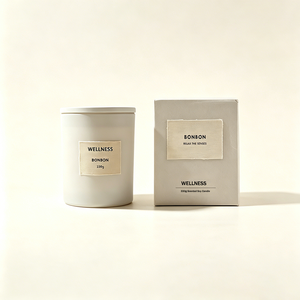
Engineered for sustainable wellness lifestyle brands. Features biodegradable kraft paper packaging, organic linen labeling, and pure soybean wax with clean-burning essential oil blends.
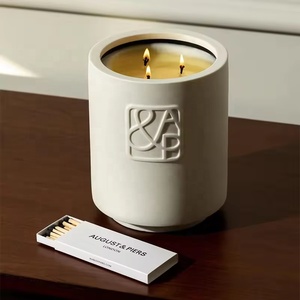
High-end ceramic vessel collection with intricate custom embossing. Designed for luxury boutique brands requiring high cold-throw fragrance retention and zero wax shrinkage.
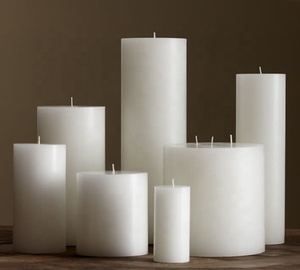
Vessel-less freestanding pillar candles formulated with high-density modified soy wax to prevent tunneling and melting deformation during high-temperature shipping.
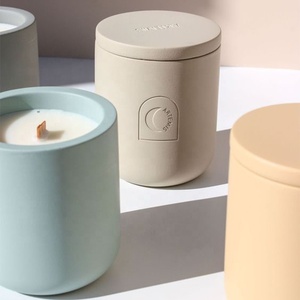
Premium wooden wick integration providing a gentle crackling fireplace sound, paired with therapeutic natural plant oils and custom gift packaging for corporate programs.
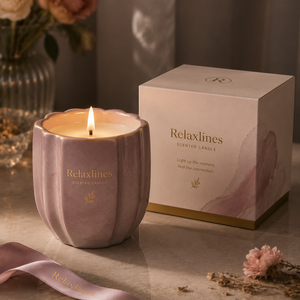
Scandi-inspired matte ceramic vessels catering to modern interior design aesthetics. Outstanding thermal stability with uniform melt pool execution.
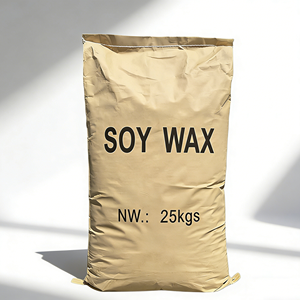
Non-toxic, soot-free formulation specifically developed for sensitive home environments, maternity gifts, and clean-beauty retail collections.
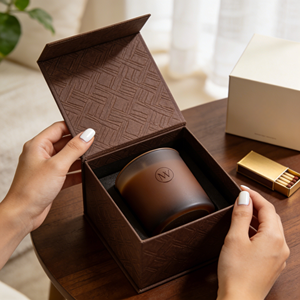
The international retail gold standard. Semi-translucent frosted glass jar with metal or wooden lids. Highly cost-effective for large-volume promotional orders.
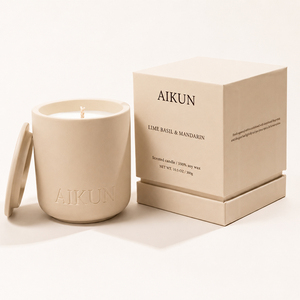
Infused with active odor-neutralizing technology. Premium presentation suited for luxury gift boxes, hospitality turndown, and pet-friendly home lines.
Soy wax is produced by the complete or partial hydrogenation of soybean oil (derived from Glycine max). The resulting triglycerides exhibit significantly altered physical characteristics: saturated fatty acid chains shift the material from liquid oil to a solid crystalline lipid matrix with specific melting points ranging from 45°C to 56°C depending on the application.
A primary challenge in soy candle manufacturing is polymorphism—the tendency of hydrogenated oil to shift between alpha, beta-prime, and beta crystal structures over time. Our advanced manufacturing techniques incorporate micro-additives (such as vegetable stearin and botanical emulsifiers) to lock the wax into a stable beta-prime structure, preventing surface frosting, rough tops, and oil sweating in transit.
Soy wax features a molecular lattice capable of entrapping synthetic fragrance compounds and natural essential oils. By optimizing the pour temperature (typically between 55°C and 65°C) and controlled cooling cycles, our candles achieve up to 10-12% fragrance loading without destabilizing the melt pool or clogging cotton wicks.
Unlike paraffin wax derived from petroleum sludge, soy wax consists of short-chain carbon bonds that burn completely when paired with correct wick diameters. Testing under ASTM F2417 standards confirms zero black carbon soot buildup, preserving indoor air quality and extending total burn times by 30% to 50% compared to equivalent volume mineral candles.
| Chemical Property / Feature | 100% Pure Soy Wax | Paraffin Wax | Beeswax | Palm Wax |
|---|---|---|---|---|
| Source Material | Hydrogenated Soybean Oil | Petroleum Refining Byproduct | Natural Bee Secretion | Palm Oil Derivatives |
| Melting Point Range | 48°C - 54°C (Container) | 46°C - 68°C | 62°C - 65°C | 54°C - 60°C |
| Environmental Impact | 100% Carbon-Neutral, Renewable | Fossil Fuel / Non-Renewable | Natural / Limited Supply | Requires RSPO Certification |
| Soot Generation | Ultra-Low / Non-Existent | High Carbon Soot Risk | Extremely Low | Low to Moderate |
| Scent Load Capacity | 8% - 12% max | 6% - 10% max | 4% - 6% max | 7% - 9% max |
| Burn Rate Efficiency | Slow & Cool Burn | Fast Burn Rate | Very Slow Burn Rate | Moderate Burn Rate |
The global candle market size is projected to reach $13.38 billion by 2030, with natural soy wax and botanical wax categories outpacing traditional petroleum bases at a CAGR of 8.4%. Strategic buyers must realign their sourcing specifications around four dominant structural shifts:
International regulatory frameworks, such as the European Union’s Carbon Border Adjustment Mechanism (CBAM) and stricter REACH compliance guidelines, are forcing global retailers to phase out petroleum-based waxes. Chinese manufacturers who maintain certified organic soy supply chains and zero-paraffin cross-contamination protocols provide importers with a major compliance buffer.
Importers are demanding holistic sustainability. Packaging trends have moved rapidly from glossy plastic laminate folding cartons to post-consumer recycled (PCR) paperboard, FSC-certified kraft packaging, screen-printed linen labels, and refillable ceramic or glass vessels that double as home decor accents after use.
Consumer search intent has shifted from standard single-note scents (e.g., vanilla, lavender) to functional wellness blends. Essential oil combinations incorporating adaptogenic botanical notes, air-purifying odor-eliminators, and stress-reducing terpene profiles now lead premium retail sales across Europe, North America, and Australia.
China's home fragrance manufacturing landscape offers unmatched advantages in supply chain integration, material sourcing efficiency, automated pouring technology, and custom private-label execution.
From hydrogenated soy oil refining to vessel glassblowing, ceramic casting, custom wick weaving, and automated multi-stage wax filling, Chinese factories provide a fully integrated pipeline that eliminates middleman markup and shortens lead times by 40%.
Whether you require custom pantone-matched frosted glass jars, foil-stamped luxury rigid boxes, bespoke fragrance oil development with IFRA safety certification, or custom laser-etched wooden lids, domestic production facilities support turnkey execution under one roof.
Modern export-oriented facilities utilize automated climate-controlled curing rooms, spectrophotometer color matching, high-precision wax temperature filling lines, and ASTM thermal stability burn chambers to guarantee every production batch meets strict retail standards.
Our manufacturing lines offer flexible MOQ tiers depending on vessel customization. Standard stock vessels (such as clear or frosted glass) start at low MOQs of 500–1,000 units per scent. Custom-molded ceramic jars or custom-colored glass runs typically require 2,000–3,000 units to meet efficient production economics.
Soy wax undergoes temperature fluctuations inside ocean shipping containers. We mitigate surface defects by utilizing optimized botanical emulsifiers, maintaining precise double-pour cooling cycles, and employing moisture-sealed barrier packaging. For high-heat shipping lanes, we supply specialized medium-high melting point soy blends (52°C–54°C).
Yes. All export formulations comply with European REACH regulations, CLP labeling standards, IFRA (International Fragrance Association) fragrance concentration safety limits, and US CPSIA/ASTM candle safety standards (ASTM F2417 for fire safety and ASTM F2058 for safety labeling).
Absolutely. We accept customer-supplied fragrance oils, provided they meet standard safety and flashpoint documentation (MSDS/SDS). Alternatively, our certified in-house perfumers can reverse-engineer or develop custom scents based on your brand target profiles.
Following final artwork sign-off and pre-production sample approval, standard bulk production runs require 25 to 35 days. Re-orders with existing custom tooling and vessel stock can be dispatched within 15 to 20 days.
FSC-certified wooden wicks create a wider horizontal flame geometry that generates a faster melt pool in soy wax, enhancing fragrance throw while creating a crackling sound effect. Organic cotton wicks offer a steady, vertical flame suited for classic aesthetics. Both options are lead-free and fully tested for clean combustion.
Contact our B2B export team today to request physical sample kits, receive instant OEM pricing estimates, or review custom vessel mold options for your brand.
