
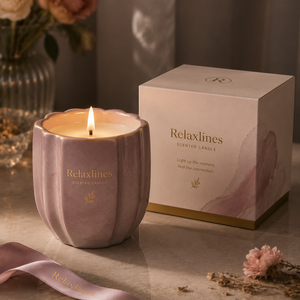
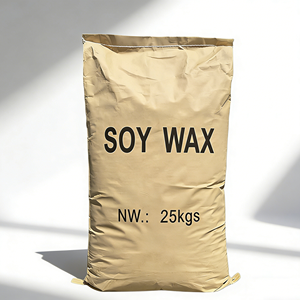
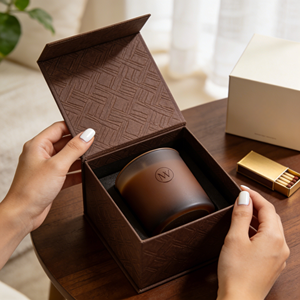
Custom Candles Made Simple · Made in the USA · Dispatch within 48 hours of artwork approval
ISO 22716 & IFRA Certified OEM/ODM Factory

Custom OEM Glass Candles Manufacturer & Factory

High-Capacity Private Label Candle Engineering, Natural Wax Chemistry, and Architectural Glass Vessel Manufacturing for Global Luxury Brands & Enterprise Procurement

Enterprise Product Catalog & Custom OEM Formats

Turnkey private label scented candles, ceramic jars, apothecary amber glass, and bespoke aromatherapy collections built to exact brand specifications.

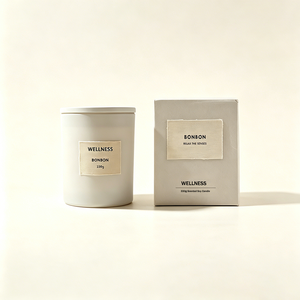
Custom OEM Eco-friendly Kraft Paper Packaging Linen Label Scented Soy Wax Candle

WELLNESS Eco-Friendly Kraft Packaging Linen Label Soy Candle

100% Natural Soy Linen Label Sustainable OEM
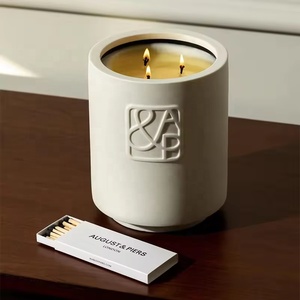
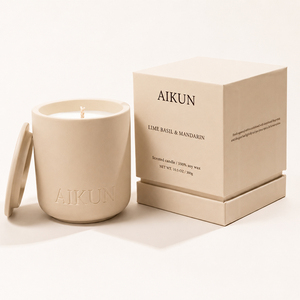
AIKUN Ceramic Jar Private Label Logo Embossed Soy Wax Scented Candle

AIKUN Luxury Ceramic Jar Embossed Private Label Scented Candle

Ceramic Vessel Embossed Logo High Scent Load
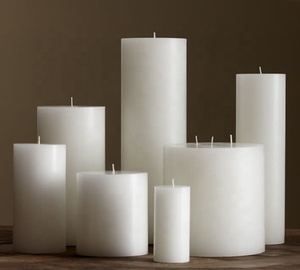
18 Inch Contemporary Custom Wholesale Luxury Soy Wax Scented Candles

Contemporary Multi-Wick Luxury Soy Wax Wholesale Candle

Large Format Multi-Wick Event & Retail
AIKUN Luxury Ceramic Jar Pure Wood Core Aromatherapy Candle With Gift Box

AIKUN Wooden Wick Ceramic Vessel Aromatherapy Candle Set

Natural Wood Wick Bespoke Gift Box Essential Oils
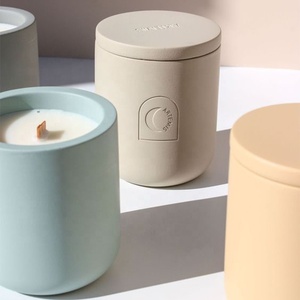
Wholesale Luxury Ceramic Nordic Aromatherapy Candle for Home Decor

Nordic Style Minimalist Ceramic Private Label Scented Candle

Nordic Aesthetic Matte Finish Custom Color Match
100% Pure Natural Organic Soy Wax Biodegradable Clean Burning Candle

Pure Organic Plant-Based Biodegradable Clean Burning Candle

100% Organic Soy Non-Toxic Zero-Soot Burn
Modern Frosted Glass Scented Candle Bulk Order Custom Logo Packaging

Modern Frosted Glass Vessel Scented Candle with Custom Box

Frosted Glass Custom Pantone Bulk Production
Aikun OEM Exquisite Gift Box Private Label Air Freshing Ceramic Candle

Aikun Executive Gift Packaging Deodorizing Aromatherapy Candle

Rigid Gift Box Odor Neutralizing Corporate Gifting
50,000+
Daily Pouring Capacity
250+
IFRA Fragrance Oils
48-Hour
Proofing Turnaround
100%
ASTM Glass Stress Tested

Enterprise Factory Capabilities & OEM/ODM Competencies

Vertical integration from vessel molding and custom glass spraying to botanical wax blending and automated liquid filling.

Thermal Shock Glass Engineering

Our glass vessels undergo rigorous annealing processes meeting ASTM C148 standards, ensuring thermal resistance up to 120°C temperature deltas without structural cracking or stress failure during prolonged candle burn cycles.

Clean-Burn Botanical Wax Matrices

We formulate custom soy, coconut, beeswax, and hydrogenated vegetable oils with optimized melting points (48°C–54°C). Zero paraffin additions, zero heavy metal wicks, and micro-crystal structures engineered for smooth melt pools.

Olfactory Load & Olfactometer Proofing

Capable of supporting high fragrance concentrations (8% to 12% fragrance oil saturation) without wax sweat or phase separation. Certified by analytical GC-MS gas chromatography for scent note integrity.

Full-Spectrum Decoration & Finishes

In-house decorative capabilities including electroplating, inner/outer lacquering, matte frosting, silk-screen printing, hot foil stamping, organic linen labels, and laser engraving on wooden lids.

Agile MOQ & Rapid Scalability

From low minimum trial batches for high-end boutique launches to scalable high-volume automated production lines producing over 1,500,000 units per month for multinational retail chains.

Global Safety & Regulatory Compliance

Full support for REACH, CLP, IFRA Standards, OSHA Safety Data Sheets (SDS), Prop 65 warning labels, and EN 15493 / EN 15494 fire safety and product safety labeling standards.

OEM Glass Candle Manufacturing Matrix & Technical Parameters

Comprehensive baseline specifications for standard glass, ceramic, and botanical wax configurations available for private label buyers.

Vessel Spec / Style Standard Capacity Wax Weight (g) Recommended Wick Type Burn Time Hours Scent Saturation Range
Apothecary Amber Glass Jar 8 oz / 250 ml 220g – 235g Braided Cotton / FSC Wood Wick 45 – 50 Hours 6% – 12% Max Load
Matte Black / White Glass Tumbler 10 oz / 300 ml 260g – 280g Double Cotton Wick / Ribbon Wood 55 – 65 Hours 8% – 12% Max Load
Luxury Embossed Ceramic Vessel 12 oz / 350 ml 310g – 330g Triple Cotton / Flat Wood Core 70 – 80 Hours 8% – 10% Max Load
Frosted Translucent Glass Vessel 9 oz / 270 ml 240g – 255g Paper-Threaded Cotton Wick 48 – 54 Hours 6% – 10% Max Load
Bespoke Grand 3-Wick Glass Bowl 18 oz / 540 ml 480g – 510g Triple Braided Organic Cotton 90 – 110 Hours 8% – 12% Max Load

Technical White Paper: Modern Engineering & Sourcing of OEM Glass Candles

The global luxury scented candle and home fragrance market has undergone a fundamental transformation. Driven by consumer demand for non-toxic clean-burning products, sophisticated aesthetic customization, and complex scent performance, the requirements placed on OEM/ODM manufacturers have escalated far beyond basic wax-pouring operations. Today’s commercial candle production represents a complex confluence of material science, thermal metallurgy, organic chemistry, and precision fluid dynamics.

Executive Summary for Procurement Directors: Achieving zero soot, maximum cold/hot scent throw, uniform melt pools, and flawless container adhesion requires rigorous control over glass annealing temperatures, wax crystallization kinetics, wick capillary absorption rates, and fragrance molecule stability. Partnering with a vertically integrated OEM factory eliminates quality variance and secures brand integrity.

1. Glass Vessel Metallurgy and Thermal Stress Dynamics

The container is not merely an aesthetic shell; it is a structural vessel subjected to sustained localized thermal gradient loads. During candle combustion, internal wall temperatures near the liquid wax surface can reach 70°C to 90°C, while the lower base of the glass remains at ambient room temperature (20°C). This severe thermal gradient induces tensile stress within the glass matrix.

As a specialized OEM candle factory, our glass manufacturing protocols comply strictly with ASTM C148 Standard Test Methods for Polariscopic Examination of Glass Containers. Glass preforms are cooled through computer-controlled annealing lehrs to eliminate residual internal strain. The composition of our soda-lime glass vessels incorporates optimized ratios of Silicon Dioxide ($SiO_2$), Calcium Oxide ($CaO$), and Sodium Oxide ($Na_2O$) to maintain low linear thermal expansion coefficients ($8.5 \times 10^{-6} / K$), effectively preventing thermal shock fractures across repeated burn cycles.

2. Botanical Wax Formulation Science & Phase Transitions

Traditional paraffin wax derived from petroleum refining has been largely rejected by premium retail brands due to volatile organic compound (VOC) emissions, toluene/benzene soot output, and non-renewable origin. Modern private label candle manufacturing centers on 100% natural hydrogenated botanical lipid bases:

  • Pure Soy Wax Formulations: Derived from soybean oil polyunsaturated fatty acid hydrogenation. Soy wax exhibits high polymorphic stability (beta-prime crystal structures), offering a creamy surface finish and low melting points ($45^\circ\text{C} - 52^\circ\text{C}$) ideal for rapid melt pool development.
  • Coconut Wax Blends: Formulated from cold-pressed coconut oil lipids blended with botanical hard waxes. Coconut wax dramatically increases oil binding capacity, permitting up to 12% fragrance loading without wax sweating or liquid phase separation.
  • Micro-Crystalline Structure Tuning: To prevent "frosting" (polymorphic recrystallization where white crystal patterns bloom on candle surfaces), our laboratory applies precise cooling temperature curves during the liquid fill phase, locking the wax in its most stable crystalline state.

3. Combustion Thermodynamics: Wick Capillarity and Soot Mitigation

The heart of candle combustion lies in capillary fluid movement. The lit wick acts as a thermal pump, melting surrounding wax, pulling liquid fuel upward via capillary pressure, and vaporizing the hydrocarbons inside the flame core ($800^\circ\text{C} - 1400^\circ\text{C}$). Perfect combustion yields only Carbon Dioxide ($CO_2$) and Water Vapor ($H_2O$). Imperfect combustion—caused by incorrect wick sizing or high oil viscosity—produces unburned elemental carbon (soot).

Our OEM engineering team selects wicks based on empirical burn-rate testing ($g/hr$ consumption analysis):

  1. Unbleached Organic Cotton Wicks: Flat braided cotton core wicks treated with inorganic salt solutions (ammonium sulfate/phosphate) to control flame height and prevent ash curling ("mushrooming").
  2. FSC-Certified Hardwood Wicks: Planed acoustic wood wicks engineered with specific grain density. As the wood burns, microscopic moisture pockets crackle softly while creating a wide horizontal flame ribbon that maximizes heat transfer across larger vessel diameters.

4. Olfactory Formulation Integrity: Cold vs. Hot Throw Chemistry

A successful luxury candle must deliver two distinct olfactory experiences: Cold Throw (fragrance diffusion at ambient room temperature) and Hot Throw (aroma vapor dispersion when the melt pool reaches $60^\circ\text{C} - 65^\circ\text{C}$). Achieving exceptional performance requires understanding fragrance note volatility and flash points.

Top notes (citrus, light botanicals) possess high vapor pressures and evaporate quickly, while base notes (sandalwood, amber, vanilla) have lower vapor pressures and require sustained thermal energy to diffuse. Our fragrance compounding laboratory works strictly with IFRA (International Fragrance Association) certified aroma compounds, ensuring that fragrance oils do not degrade under high thermal pour temperatures ($68^\circ\text{C} - 75^\circ\text{C}$).

Future Sourcing & Product Development Trends (2025–2030)

Strategic market insights for brand managers, procurement officers, and private label executives planning next-generation home fragrance collections.

Refillable Vessel Ecosystems

Consumers are demanding permanent luxury vessels paired with eco-friendly solid wax drop-in refills or biodegradable wax pods. OEM manufacturing is pivoting toward heat-resistant architectural ceramics and heavy-walled glass engineered for multi-year reuse.

Functional Aromatherapy Chemistry

Beyond pleasant scents, market demand has shifted to functional olfactory formulations—scents scientifically proven to reduce cortisol levels, enhance focus, or facilitate sleep. Utilizing micro-encapsulated neuro-scent botanical extracts is the next frontier.

Zero-Carbon Supply Chains & Local Proofing

Carbon footprint transparency is now a prerequisite for retail distribution. Procurement officers favor OEM factories utilizing regional agricultural soy crops, solar-powered wax heating tanks, and 100% recyclable mono-material packaging.

Frequently Asked Questions (OEM Sourcing FAQ)

Clear, direct technical answers regarding minimum order quantities, turn-around times, sample proofing, and custom manufacturing processes.

What is the Minimum Order Quantity (MOQ) for custom OEM glass candle orders?
We provide scalable MOQ structures tailored to brand growth stages. For standard stock glass formats (such as 8 oz amber glass jars or 10 oz matte tumblers), our true low minimum allows initial market testing with zero case minimum requirements or low 12–48 unit production runs. For custom-colored glass lacquering or bespoke ceramic mold tooling, typical MOQs start at 500 to 1,000 units per fragrance SKU.
How fast can custom samples and production runs be dispatched?
Digital label proofs and scent sample kits are processed within 24 to 48 hours. Once label artwork and sample candle burn tests receive final client sign-off, standard production orders are dispatched within 48 hours to 10 business days, depending on batch volume and packaging complexity.
Can you match custom Pantone colors for glass jars and brand packaging?
Yes. Our automated glass coating line supports 100% precise Pantone Color Matching System (PMS) execution. Options include high-gloss spraying, soft-touch matte frosting, translucent gradient washes, electroplated metallic mirrors, and inner-wall ceramic lacquering.
What documentation and safety compliance certifications do you provide?
Every production batch includes full compliance documentation: IFRA Certificates of Conformity, Safety Data Sheets (SDS) for transport and handling, CLP safety label artwork compliance, REACH declaration documents, and ASTM C148 thermal stress certificates for glass containers.
Do you offer custom fragrance compounding and scent formulation services?
Yes. In addition to our master scent library featuring over 250 pre-tested fragrance oils across six olfactory families, our master perfumers can clone existing brand scents or compound proprietary signature fragrances utilizing essential oils and aroma molecules.
How do you prevent wax shrink sinks and glass pulling during cooling?
Wax shrinkage and wet spots (air gaps between wax and inner glass walls) are eliminated through strict micro-climate humidity control and multi-stage temperature pour lines. Vessels are pre-heated prior to wax injection, followed by controlled slow-cooling tunnels to ensure 100% smooth top surfaces and uniform glass adhesion.

Start Your Custom OEM Glass Candle Project Today

Connect directly with our engineering team to request sample kits, receive instant factory quotes, or review custom packaging and fragrance options.